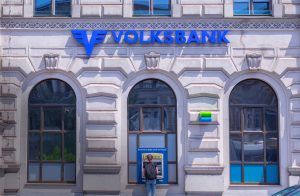
Picture this: A young couple walks into their local Volksbank (people’s bank) to discuss investment options for their one-year-old daughter. Both partners are present, both earn incomes, both have skin in the game. Yet the Bankberater (bank advisor) directs every single comment, every chart, every recommendation exclusively to the husband. The wife, who’s done her homework through Finanzfluss podcasts and financial blogs, fires critical questions across the table. The advisor doesn’t even make eye contact. He just keeps selling to the man.
This isn’t a scene from a 1950s time capsule. It’s a story playing out in German bank branches right now, and it reveals a twin problem: institutional gender bias combined with a systematic push for expensive, underperforming active funds over low-cost passive strategies.
The Invisible Woman in German Bank Advisory
The financial services industry in Germany operates with a curious blind spot. Despite women controlling an increasing share of household wealth and making the majority of daily financial decisions, bank advisors routinely treat them as secondary participants in investment conversations.
Research from the Frankfurter Neue Presse shows the stakes: women in Germany earn on average 16 percent less than men, and 46.9 percent believe they’ll be poorly prepared financially for retirement. Yet when they seek professional guidance, the very moment they try to close that gap, they’re sidelined in favor of their male partners.
The pattern is so consistent it has a script. The advisor greets both parties, then spends the next 45 minutes explaining portfolio theory, risk profiles, and “exclusive opportunities” to the man. Questions from the woman get deflected with simplified answers or redirected to her partner. It’s financial gaslighting dressed up as Beratung (advisory service).

This dynamic creates a vicious cycle. Women, feeling dismissed, disengage from the investment process. Their male partners, pressed for time and trusting the “expert”, delegate decisions to the advisor. The advisor, free from critical questioning, pushes products that benefit the bank, not the client.
The UniGlobal Sales Pitch: When “Active” Means “Expensive”
The product of choice in these scenarios is almost always an aktiv gemanagter Fonds (actively managed fund). In the Volksbank case, it was UniGlobal, a fund with management fees that quietly devour returns while promising to outperform the market.
Study Insight: A recent Harvard Business School study found that 71 percent of trades made by active managers follow predictable patterns that algorithms can replicate. The “special sauce” of human judgment? It’s mostly routine behavior that doesn’t justify premium fees.
Yet German bank advisors continue pushing these products because they generate higher commissions. The woman asking about TER (total expense ratio) and tracking difference gets the cold shoulder because she threatens the business model. Her husband, who’d rather delegate than dive into investment theory, becomes the easier mark.
Why Financial Literacy Isn’t the Whole Answer
Many commentators blame low financial education. “People are just financially illiterate”, they say, pointing to the 66.9 percent of women who cite lack of financial breathing room as their primary retirement concern.
But this misses the point. The woman in our Volksbank story was financially literate. She’d educated herself through podcasts and online resources. She understood that a FTSE All-World ETF via ING would cost a fraction of the active fund while delivering comparable, or superior, returns. Her knowledge didn’t protect her, it made her invisible.
This exposes a darker truth: the German banking system isn’t failing to educate women, it’s actively resisting informed female clients. The industry depends on a knowledge gap that women are increasingly closing. When they do, advisors don’t adapt, they exclude.
Even attempts to create “women-friendly” financial services sometimes miss the mark. Some firms market themselves as empowering women while selling the same high-fee products, just wrapped in pink packaging. The Verbraucherzentrale (consumer protection center) has sued companies for exactly this kind of deceptive marketing.
The Cost of Being Ignored
The financial impact is brutal. Let’s run the numbers from the Volksbank scenario:
€250/month for 10 years, then €500/month for 10 years, then €1,000/month for 10 years in a high-fee active fund.
Same contributions in a low-cost global ETF.
Assuming a 7% gross return, the active fund with 1.5% TER leaves the family with roughly **€380,000** after 30 years. The passive ETF with 0.2% TER? Around **€460,000**. That **€80,000** difference is the price of being talked over in a bank meeting.
This gap compounds the existing gender wealth disparity. Women already face career interruptions for Elternzeit (parental leave) and lower lifetime earnings. Getting shunted into expensive products exacerbates these structural disadvantages.
The Allianz PrivateFinancePolice case shows this in stark relief: a €15,000 “diversified” product actually lost money while ETFs soared. The difference wasn’t market performance, it was fees.
The Behavioral Trap Advisors Exploit
German bank advisors understand something crucial: most people don’t want to make investment decisions. They want to feel secure. The advisor’s job isn’t to optimize returns, it’s to transfer responsibility from client to institution.
This creates what one might call the “Delegation Premium.” Clients willingly sacrifice 1-2% annually in fees to avoid the discomfort of managing their own money. Advisors exploit this by framing active management as “professional oversight” and passive investing as “going it alone.”
Women who push back against this narrative threaten the entire value proposition. When she asks, “Why should I pay 1.5% for a fund that tracks an index minus fees?” she’s not just questioning a product, she’s questioning the advisor’s reason for existing.
The Investmenttagebuch (investment journal) phenomenon reveals how advisors rarely document their reasoning, making it impossible to evaluate their decisions objectively. This opacity protects them from accountability.
Breaking the Cycle: What Actually Works
So why don’t more people invest in low-cost ETFs? The answer isn’t complexity, it’s distribution. German banks have no incentive to sell products that generate minimal commission. The entire branch advisory model depends on pushing high-margin active funds and insurance wrappers.
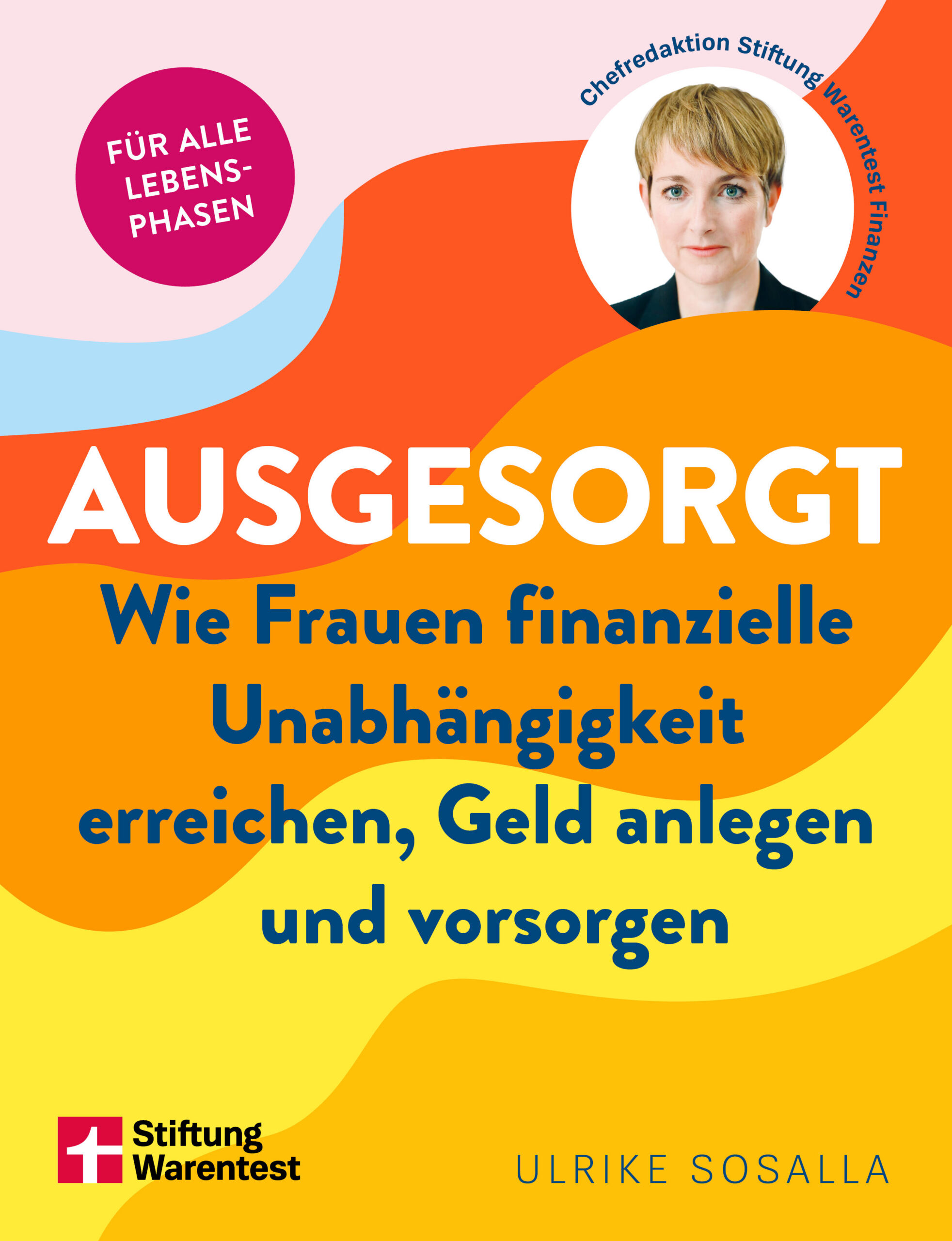
The few Germans who do invest in passive strategies typically bypass banks entirely. They use direct brokers like ING, Trade Republic, or Scalable Capital. They follow independent sources like Finanzfluss or Stiftung Warentest’s “Ausgesorgt” guide for women.
This creates a bifurcated market: bank clients in expensive underperforming funds, and self-directed investors capturing market returns at minimal cost. The dividing line often runs along gender, with women overrepresented in the first group due to advisory bias.
The “Hätte, hätte, Fahrradkette” mentality keeps people returning to advisors who failed them. Regret over past decisions makes investors seek professional guidance, even when that guidance underperforms.
The Path Forward
Change won’t come from banks voluntarily. The profit motive is too strong. Instead, we’re seeing three shifts:
- Direct platforms are disintermediating advisors. When you can open an ETF savings plan on your phone in five minutes, the bank advisor’s role evaporates.
- Regulatory pressure is mounting. The EU’s MiFID II rules require fee transparency, making it harder to hide costs in complex products.
- Women-specific resources are filling the advice gap. Stiftung Warentest’s “Ausgesorgt” guide provides women with independent, actionable financial planning advice that doesn’t treat them as an afterthought.
The question isn’t whether women can manage money, they clearly can. The question is how long German banks can afford to ignore their most informed clients while selling inferior products to everyone else.
Actionable Takeaways
If you’re walking into a German bank for investment advice:
- Bring your partner, but make sure you both ask questions. If the advisor only addresses one of you, call it out immediately.
- Never accept a product recommendation without seeing the TER and comparing it to a comparable ETF. The advisor should justify every basis point.
- Get the recommendation in writing with the reasoning documented. If they won’t provide it, walk away.
- Consider a Honorarberater (fee-only advisor) who charges for time rather than products. They have no incentive to push high-fee funds.
- Use bank meetings for information, not decisions. Sleep on it, research the product, and check independent sources before signing.
The German banking system works with the same efficiency as a Deutsche Bahn train, usually impeccable, until there’s construction on the line. Right now, the entire advisory track needs rebuilding. Women are just the first to notice the delays.