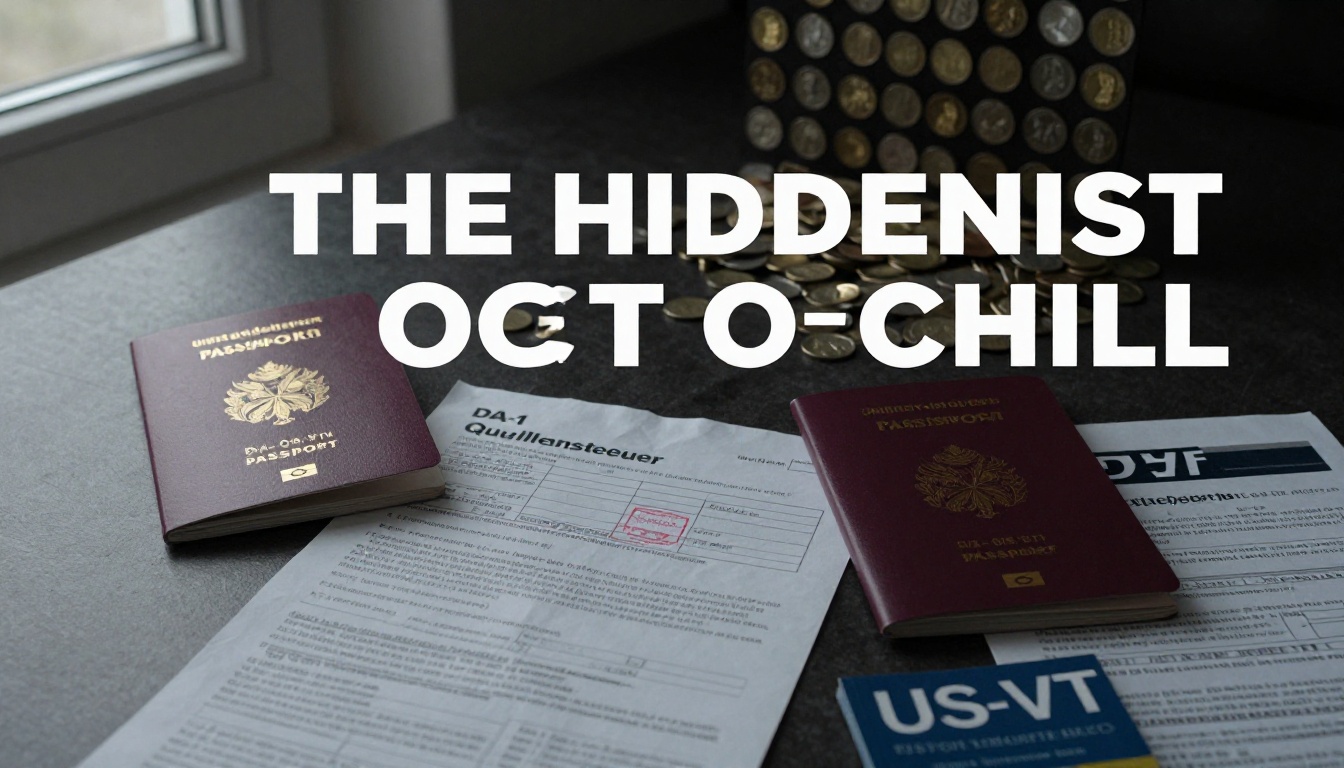
The internet loves simple answers. "Just buy VT and chill", they say. One ETF, one decision, zero stress. For Swiss investors scrolling through international forums, this gospel sounds like financial nirvana, until you file your first Steuererklärung (tax declaration) and realize the withholding tax nightmare you’ve stumbled into.
Here’s what the Reddit crowd won’t tell you: the choice between Ireland-domiciled and US-domiciled ETFs isn’t just about expense ratios or trading volume. It’s about navigating a Byzantine tax system where the wrong decision can lock you into irreversible costs, and where your broker choice determines whether you reclaim thousands of francs or watch them vanish into foreign tax coffers.
The Two-Tier Tax Trap: L1TW and L2TW Explained
Swiss tax authorities don’t care where your ETF is listed. They care about where it’s domiciled, its legal home. This distinction creates two levels of withholding tax that most investors discover too late.
Level 1 Tax Withholding (L1TW) hits dividends at the source. When a US company pays a dividend to your ETF, the US government takes its cut first. For Ireland-domiciled ETFs, this is 15%. For US-domiciled ETFs, it’s 0%. For Luxembourg-domiciled funds, it’s a brutal 30%. This tax is non-refundable. Once it’s gone, it’s gone forever.
Level 2 Tax Withholding (L2TW) is where Switzerland gets involved. This is the tax your broker withholds when paying you dividends. For US-domiciled ETFs, it’s 15%, but this amount is reclaimable through the DA-1 form on your Swiss tax return. For Ireland-domiciled ETFs, a double taxation treaty means 0% L2TW, clean and simple.
The math looks straightforward: US ETFs should win because you reclaim that 15% L2TW, right? Not so fast.
The Broker Battle: Why IBKR Isn’t Always the Holy Grail
Interactive Brokers (IBKR) dominates recommendations for good reason. As a Qualified Intermediary, they handle W8-BEN forms automatically, reducing your L2TW on US ETFs to the treaty rate of 15%. Their currency conversion uses interbank rates, saving you 0.5-0.95% compared to Swiss neobanks like Neon or Yuh. And they don’t charge Swiss stamp duty, saving 0.15% on every foreign trade.
But this efficiency comes at a cost: complexity. One user reported spending 20 minutes per account filling out DA-1 forms, manually converting USD dividends to CHF because their activity statement mixed currencies. "They want some information in CHF and some in USD", they explained, "while the activity statement doesn’t always show it in that currency, so I have to manually sum the dividends/withheld tax of each ticker and convert."
Swiss brokers like Swissquote simplify this dramatically. They handle the DA-1 process internally, sparing you the spreadsheet gymnastics. But they charge stamp duty and higher trading fees. Neon and Yuh offer zero-commission ETF purchases but hit you with currency spreads and, crucially, prevent you from buying US-domiciled ETFs due to PRIIPs regulation compliance.

The Paperwork Penalty: DA-1, W8-BEN, and R-US 164
Let’s talk about the DA-1 form. This is your golden ticket to reclaiming US withholding tax, but only if your broker cooperates. With IBKR, you file it annually with your Steuererklärung. The process works, but it’s extra work.
If you use a non-Qualified Intermediary broker, you need both the DA-1 form and the R-US 164 form. That’s double the paperwork for the same result.
Swiss brokers with QI status (like Swissquote) let you skip the W8-BEN and just file DA-1. But you’re back to paying stamp duty and higher fees.
The real kicker? You cannot reclaim the 15% L1TW on Ireland ETFs. Ever. Meanwhile, that 15% L2TW on US ETFs comes back to you via DA-1. Over decades, this difference compounds into tens of thousands of francs.
The Hidden Risks They Don’t Mention
The research reveals two elephant-sized risks that rarely surface in forum discussions:
US Estate Tax: If you hold more than $60,000 in US-domiciled assets and die, the US government can tax your estate up to 40%. This doesn’t apply to Ireland-domiciled ETFs. For high-net-worth Swiss investors, this alone makes US ETFs a ticking time bomb. The US estate tax risks of holding US-domiciled ETFs like VT as a Swiss resident are real and often overlooked.
Geopolitical Access Risk: In a severe geopolitical crisis, US regulators could freeze access to US-listed ETFs for foreign investors overnight. Your assets wouldn’t disappear, but you couldn’t trade them. Switzerland’s financial stability means Irish-domiciled funds face no such risk. Geopolitical risks of relying on US-listed ETFs accessible through Swiss brokers become relevant when you consider long-term horizons.
The Real Cost Comparison: A 30-Year Projection
Let’s run the numbers for a Swiss investor putting CHF 100,000 into a global equity ETF, then adding CHF 10,000 annually.
Option A: Vanguard FTSE All-World (IE00BK5BQT80)
– TER: 0.22%
– L1TW: 15% on US dividends (non-refundable)
– L2TW: 0%
– No stamp duty via IBKR
– No estate tax risk
– 30-year cost: ~CHF 8,500 in taxes and fees
Option B: Vanguard Total World Stock (VT)
– TER: 0.07%
– L1TW: 0%
– L2TW: 15% (reclaimable)
– No stamp duty via IBKR
– Estate tax risk above $60k
– 30-year cost: ~CHF 2,500 in fees, plus DA-1 paperwork
– Potential estate tax: Up to 40% of holdings above $60k
The TER difference saves you about CHF 6,000 over three decades. But if you ever exceed $60k in US assets and don’t have proper estate planning, your heirs could lose 40% of everything above that threshold. That’s not a tax, that’s a confiscation.
The Practical Verdict: What Should You Actually Do?
For beginners with portfolios under CHF 100,000, the simplicity of Ireland-domiciled ETFs through a Swiss broker like Swissquote or Yuh justifies the slightly higher costs. You avoid paperwork, eliminate estate tax risk, and can focus on building the habit of investing.
For intermediate investors with CHF 100k-500k, IBKR with US ETFs becomes compelling if you’re willing to handle DA-1 forms. But split your holdings: keep US ETFs below $60k total to avoid estate tax complications, and use Ireland ETFs for the remainder.
For high-net-worth investors above CHF 500k, the estate tax risk becomes unacceptable. Stick to Ireland domiciles, or explore Swiss-domiciled funds despite their higher costs. The 15% non-refundable L1TW hurts, but it’s predictable and capped. The US estate tax is neither.
The Bottom Line: There Is No "Best" ETF
The VT and Chill mantra works brilliantly, for Americans. For Swiss residents, it ignores our unique tax treaties, our broker limitations, and our estate tax exposure. How US-domiciled ETFs like VT complicate tax reporting for Swiss residents shows that simplicity for them means complexity for us.
Your choice should hinge on three questions:
1. How much is your time worth? DA-1 forms cost hours annually.
2. What’s your total portfolio size? Estate tax thresholds matter.
3. Which broker can you actually use? PRIIPs blocks many Swiss investors from US ETFs entirely.
The dividend tax trap isn’t the 15% you see, it’s the hidden costs, risks, and paperwork you don’t. Choose accordingly.
Actionable next steps:
– Check your broker’s Qualified Intermediary status before buying US ETFs
– Calculate your total exposure to US-domiciled assets for estate tax risk
– Download your canton’s DA-1 form to understand the reporting burden
– Consider why some Swiss investors are diversifying beyond popular US-domiciled ETFs like VT as part of your broader strategy