The Swiss Federal Railways (SBB CFF FFS) operates with the same reliability as an SBB train, usually impeccable, until construction slows the line. But when it comes to their subscription system, that construction has become permanent. For regular travelers, especially students trying to optimize every franc, navigating the Abo labyrinth feels less like efficient Swiss engineering and more like a deliberate puzzle designed to extract maximum revenue.
A university student recently built Abos Check, an algorithmic tool that analyzes your travel patterns to find the cheapest combination of SBB travelcards. The fact this tool needs to exist reveals the core problem: the system has become so convoluted that even mathematically-inclined students can’t manually calculate the best deal anymore.
The Subscription Soup: Halbtax, GA, and Everything Between
Let’s start with the basics. The Halbtax (Half-Fare Card) costs CHF 170 annually and halves your ticket prices. Simple enough, until you do the math. You need to spend CHF 380 per year at full price just to break even. For a student commuting between Zurich and Bern twice a month, that’s easily surpassed. But here’s where it gets interesting: over 3.45 million Halbtax cards were in circulation by end of 2025, making it Switzerland’s most popular subscription by far.
Then there’s the GA Travelcard (General Abonnement), the “all-you-can-ride” pass. At roughly CHF 3,860 for second class, it sounds expensive, until you’re spending CHF 300+ monthly on individual tickets. Only about 423,000 people have one, suggesting most Swiss travelers do the math and walk away.
The newer Halbtax PLUS cards add another layer. These route-specific subscriptions come in three flavors (1000, 2000, 3000), each covering different geographic zones. With 190,283 units sold, they’re gaining traction. But they’re also where the system starts to show its cracks.
Why Students Are Building Their Own Tools
The developer behind Abos Check created it because public transport was his single largest annual expense. Many international residents express similar frustration, finding that Swiss mobility costs rival their health insurance premiums, no small feat in a country where mandatory health coverage runs hundreds per month.
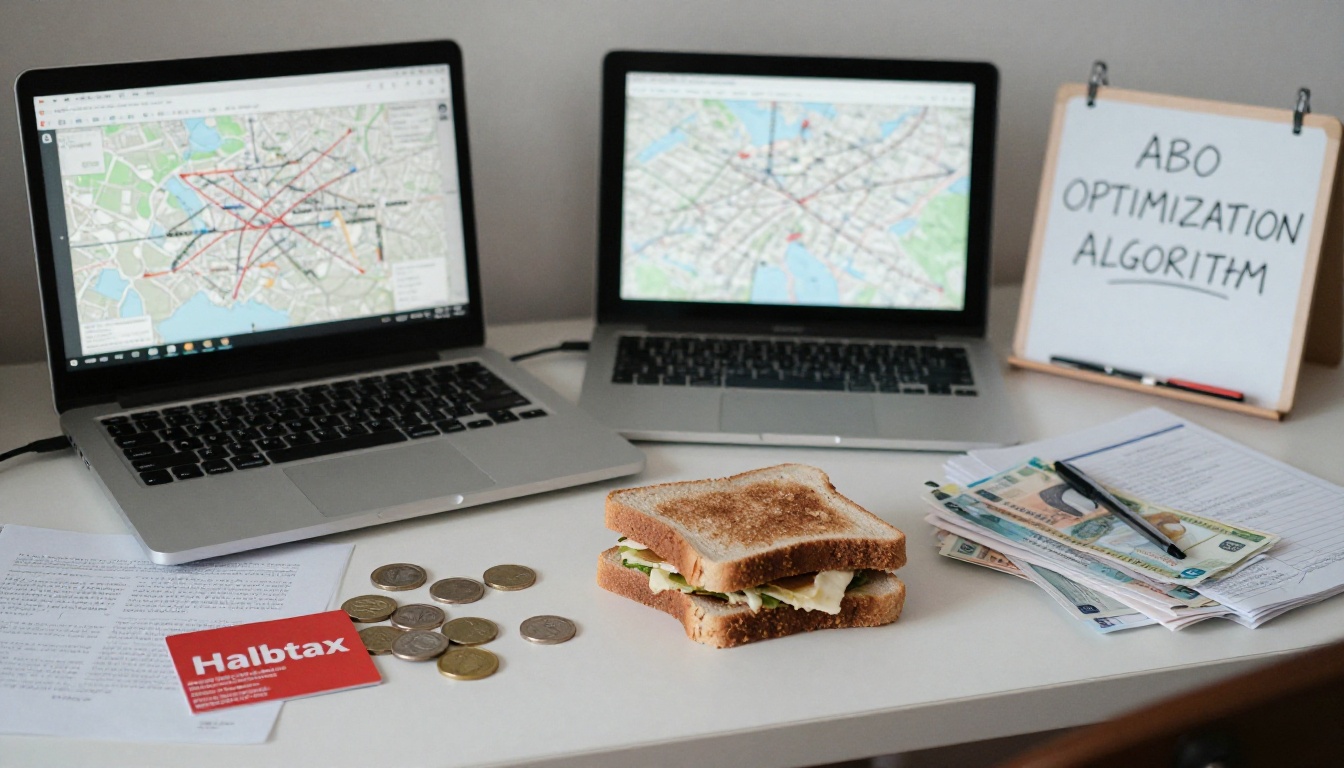
The tool works by having you input your regular routes and travel frequency, then running optimization algorithms to recommend the cheapest combination. It currently handles GA, Halbtax, and all Halbtax PLUS variants. The results can be surprising: many users discover that layering multiple Halbtax PLUS cards beats a GA for their specific patterns.
But there’s a catch, and it’s a big one.
The Regional Network Blind Spot That Costs You Hundreds
The most significant limitation of Abos Check, and the SBB’s own pricing structure, ignores regional and local networks. As one user discovered, for travel within the ZVV (Zurich Transport Network) area, the tool recommended spending CHF 1,690 on Halbtax Plus + Halbtax. Yet a 9-Uhr-Pass (9 o’clock pass) from ZVV costs only CHF 1,092.
That’s a CHF 600 difference for the exact same mobility. Multiply that across Switzerland’s 20+ regional networks, and you understand why some call the system broken.
The Tarif- und Verkehrsverbünde (fare and transport networks) often provide the cheapest options for regular commuters. These include:
– ZVV (Zurich)
– OSTWIND (Eastern Switzerland)
– unireso (Northwest Switzerland)
– mobilis (Lucerne)
A tool that ignores these isn’t just incomplete, it’s potentially misleading you into overpaying by significant margins.
The Digital Shift: 76% of Tickets Now Sold Online
The move to digital isn’t just about convenience. According to Alliance Swisspass, 76.4% of all ticket sales happened through digital channels in 2025, up 2.5 percentage points from 2024. A quarter of these digital sales used automatic ticketing.
This digital dominance means fewer people are talking to SBB staff who might actually explain the optimal combination. You’re left staring at an app, trying to compare apples to oranges to some fruit that only exists in the SBB pricing matrix.
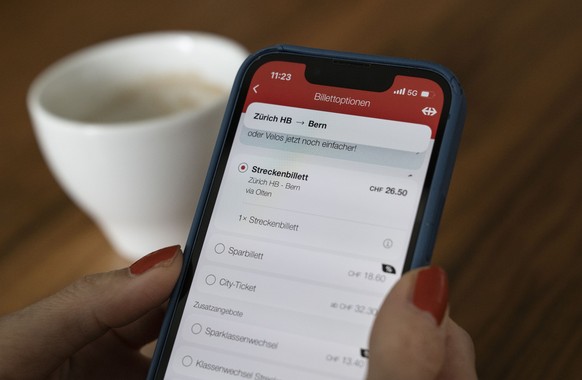
The SBB app shows you ticket prices, but it won’t tell you if a regional pass would be cheaper for your commute. That requires research most people won’t do.
The Student Perspective: Why Transport Eats Your Budget
For students, the math is particularly brutal. Many don’t own cars and rely entirely on public transport. While a GA might seem like freedom, at CHF 3,860 it’s often financially irresponsible compared to strategic ticket buying.
Consider a student living in Zurich studying in Bern:
– Monthly commute: ~8 round trips
– Zurich-Bern full price: CHF 104 round trip
– With Halbtax: CHF 52 round trip
– Monthly cost: CHF 416
– Annual cost: CHF 4,992
A GA at CHF 3,860 saves money, but only if you never use the Sparbillett (saver tickets) or Spartageskarte (saver day tickets) at CHF 29-52 per day.
The real optimization? Mixing Halbtax with advance-purchase saver tickets and regional passes. But this requires planning discipline most students lack, and shouldn’t need.
Algorithmic Optimization vs. Human Behavior
Abos Check represents a trend: using algorithms to fight complexity. The tool calculates thousands of combinations instantly, something no human can do. But it only works if you know your travel patterns a year in advance and never deviate.
Real life doesn’t work that way. A friend invites you to Lausanne for the weekend. A professor schedules an extra seminar in Basel. Your internship location changes mid-semester. The algorithm can’t predict spontaneity, and the SBB pricing structure punishes it.
This is where Swiss student financial planning and cost optimization becomes crucial. Just as students need to plan for health insurance cliffs at age 25, they need to model their mobility costs with the same precision.
The True Cost of “Convenience”
The GA’s appeal isn’t just financial, it’s psychological. No thinking, no calculating, just swipe and go. But that convenience costs CHF 423,000 people roughly CHF 1.6 billion annually. How many are overspending by 20-30% because the alternative requires a spreadsheet and a PhD in SBB pricing?
The GA Night (CHF 123,037 sold) shows the system can create targeted products. But why isn’t there a “Student GA” or a “Young Professional” tier that acknowledges different travel patterns?
Practical Optimization Strategies
Forget the GA vs. Halbtax debate. Real optimization means:
1. Map Your Actual Routes
Track every journey for a month. Use the SBB app’s history feature. You’ll likely find 80% of your travel follows predictable patterns.
2. Check Regional Passes First
Before considering any SBB Abo, check your local Verkehrsverbund. The ZVV 9-Uhr-Pass, OSTWIND’s options, or mobilis products often undercut national subscriptions.
3. Layer Halbtax PLUS Strategically
If you commute Zurich-Bern but occasionally travel to Geneva, a Halbtax PLUS 1000 for your main route plus individual tickets might beat a GA.
4. Exploit Saver Tickets Aggressively
The Spartageskarte at CHF 29 (with Halbtax) requires planning but slashes costs. Buy them for known future trips during the six-month advance window.
5. Do the Real Math
Calculate your break-even point including:
– All regular commutes
– 50% of your irregular trips (the ones you’ll actually take)
– Saver ticket opportunities
– Regional pass alternatives
Is the System Broken or Just Complex?
The SBB Abo system isn’t broken in the sense of malfunctioning. It’s functioning exactly as designed: offering maximum choice while maximizing revenue. The complexity isn’t a bug, it’s a feature that preys on decision fatigue.
What is broken is the lack of transparency. The SBB app should automatically recommend the optimal subscription based on your travel history. Regional networks should be integrated into national planning tools. Pricing should be intuitive, not algorithmically obscure.
Until then, tools like Abos Check fill a gap the SBB created. But they also highlight a systemic failure: when citizens need third-party algorithms to avoid being overcharged by their own railway, something has gone wrong.
The Bigger Picture: Swiss Cost Optimization
This isn’t just about trains. It’s about Swiss personal finance optimization and systemic cost pressures that force residents to become amateur accountants. Whether it’s health insurance, taxes, or transport, the Swiss system demands optimization expertise that most people don’t have time to develop.
For those just starting their financial journey in Switzerland, starting financial optimization in Switzerland begins with understanding these systemic inefficiencies. The CHF 600 you save on transport could fund your Säule 3a (Third Pillar) contribution for the month.
Actionable Takeaways
- Use Abos Check as a starting point, not a final answer. It’s a calculator, not a crystal ball.
- Always compare regional passes before committing to national subscriptions.
- Track your travel for 30 days before making annual decisions.
- Set calendar reminders to buy Spartageskarten for known trips.
- Re-evaluate quarterly, Swiss mobility needs change faster than annual subscriptions allow.
The SBB Abo system works perfectly for the SBB. Whether it works for you depends entirely on how much time you’re willing to spend outsmarting it. In a country that prides itself on efficiency, that’s the real controversy.