Every January, thousands of Swiss residents face the same quiet panic: a five-figure tax bill lands in the mailbox, and the money you’ve been hoarding in your checking account suddenly feels painfully inadequate. The Swiss approach to tax reserves, meticulous, conservative, and often counterproductive, creates a unique financial purgatory where your money is neither working for you nor truly safe.
The dilemma is straightforward but brutal. You can let cash pile up in an account earning next to nothing, or you can chase yield with low-risk investments and pray the timing works out. Add the USD/CHF currency risk that turns “safe” dollar-denominated instruments like BOXX into potential wealth shredders, and you’ve got a problem that most generic financial advice simply doesn’t address.
The Tax Reserve Reality Check: What Swiss Residents Actually Do
Most people fall into one of three camps. The first group pays monthly into a dedicated savings account, treating it like a subscription they can’t cancel. The second lets cash accumulate in their main account, creating a mental buffer that gets progressively eroded by inflation. The third tries to optimize, often by paying taxes in advance through the cantonal Steuervorschuss (tax advance payment) system.
Here’s where it gets interesting. Zurich currently offers 0.75% annualized on advance payments for 2026. Last year, it was still 1%. That rate beats most savings accounts and matches some money market funds, with zero risk and zero currency exposure. Geneva, by contrast, pays a paltry 0.1%. Vaud? Zero. Nothing. The difference isn’t trivial, on a CHF 20,000 tax reserve, you’re looking at CHF 150 in Zurich versus CHF 20 in Geneva versus CHF 0 in Vaud. The Swiss federal system at its finest.
Many international residents report waiting weeks for banking appointments in major Swiss cities, despite Switzerland’s reputation for efficiency. This administrative friction pushes people toward the simplest solution: do nothing and let cash sit.
The Currency Trap: Why Your “Safe” USD Investment Is a Landmine
The research data reveals a critical insight: some investors consider parking tax money in USD-denominated instruments like BOXX, attracted by seemingly higher yields. This is financial masochism for anyone with CHF-denominated tax obligations.
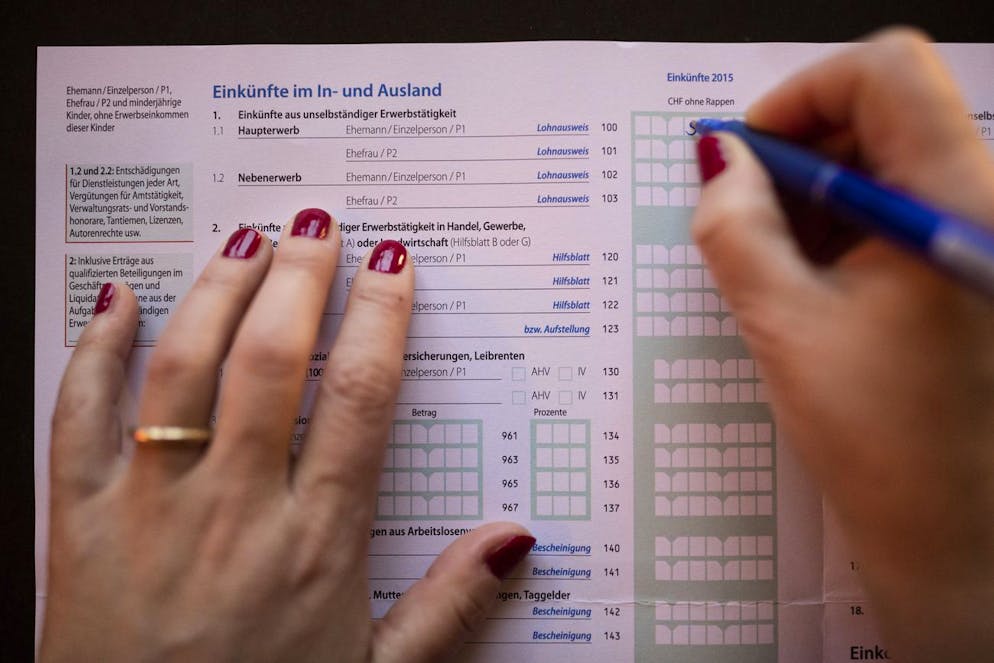
Consider the math. If you invest CHF 10,000 equivalent in a USD money market fund yielding 4.5%, but the USD drops 3% against the CHF before your tax bill is due, you’ve effectively earned 1.5%, maybe less after conversion fees. If the USD drops 5%, you’ve lost money. The Swiss franc’s safe-haven status means it tends to strengthen during global uncertainty, precisely when you might need to liquidate investments to cover an unexpected tax reassessment.
The PrimeTax overview of 2026 changes highlights increased transparency requirements under CARF (Crypto-Asset Reporting Framework) and CRS (Common Reporting Standard). While these don’t directly impact traditional currency investments, they signal a broader trend: Swiss tax authorities are getting better at tracking cross-border flows. Currency speculation with your tax reserve is a game you can’t win.
Low-Risk Swiss Options: The Actual Menu
So what can you do within Switzerland’s ecosystem?
Cantonal Advance Payments: The closest thing to a free lunch. In Zurich, you get 0.75% with zero risk. You pay your Kantons- und Gemeindesteuern (cantonal and municipal taxes) and Direkte Bundessteuer (direct federal tax) in monthly installments, and the canton pays you interest. The catch? You need to estimate accurately. Overpay, and you’ve given the government an interest-free loan. Underpay, and you face penalties.
Swiss Franc Money Market Funds: These yield around 0.5-0.8% currently, but come with management fees and minimal liquidity risk. The real issue is that they often invest in instruments with slightly longer durations than your tax timeline, creating a mismatch.
Savings Accounts: PostFinance offers 0.5% on its e-funds account up to CHF 25,000. UBS and Credit Suisse offer similar rates, but only as teaser promotions. The rates are taxable, which reduces your net yield significantly.
Säule 3a (Third Pillar): Here’s where it gets legally creative but risky. You could theoretically contribute to a Säule 3a account and withdraw early to pay taxes, but you’d face a withdrawal tax plus lose the retirement benefit. The Rothstein guide explicitly warns against uncoordinated Vorsorgeeinzahlungen (pension contributions). This is a bad idea for tax reserves.
The Liquidity vs. Yield Knife Fight
The fundamental tension is this: tax bills have hard deadlines. The Steuererklärung (tax declaration) for 2025 is due by March 31, 2026, in most cantons. Extensions are possible but not guaranteed. Your tax reserve must be available, in CHF, on that date.
Low-risk investments aren’t risk-free. A Swiss money market fund could experience a temporary liquidity crunch. A bond ETF could drop 2-3% in a market panic. Even the “safe” option of paying in advance locks you into a monthly schedule that might not match your cash flow.
Many newcomers express frustration, finding the Zurich rental market nearly impossible to navigate without local contacts. The same principle applies to tax optimization, the system rewards those who understand its unwritten rules. For tax reserves, the unwritten rule is: liquidity trumps yield, but unnecessarily low yield is just lazy.
2026 Tax Changes: The Transparency Squeeze
The PrimeTax analysis of 2026 legislative changes reveals a critical shift. Switzerland is implementing CARF for crypto assets, expanding CRS reporting, and launching a federal transparency register (LETA). While these target money laundering and cross-border tax evasion, they create a compliance-heavy environment where simple, transparent strategies win.
The extension of loss carryforwards from 7 to 10 years (effective 2028) might seem irrelevant to tax reserves, but it reflects a broader principle: Swiss tax law is becoming more complex, not less. In this environment, exotic investment structures for your tax money create more problems than they solve.
A Practical Decision Framework
Decision Strategy by Liability Size
- If your tax bill is under CHF 10,000: Use cantonal advance payments if available in your canton. The administrative overhead of investing isn’t worth it. In Zurich, that’s CHF 75 per year, enough for a nice dinner.
- If your tax bill is CHF 10,000-30,000: Split the difference. Pay half through advance payments, keep half in a PostFinance e-funds account. You retain flexibility while capturing some yield.
- If your tax bill exceeds CHF 30,000: Consider a laddered approach. Three months before your tax deadline, move funds into a money market fund. Three months out, you’re unlikely to face major volatility, and the yield pickup matters more.
- If you have USD income: Convert to CHF immediately upon receipt. Don’t let currency risk compound your tax headache. The VT and Chill? The Hidden US Estate Tax Trap for Swiss Investors analysis shows how cross-border currency exposure creates unexpected liabilities.
The Internal Link Ecosystem
This decision connects to broader Swiss financial strategy. Your approach to tax reserves should align with your Swiss Financial Order of Operations. If you’re still building emergency savings, don’t chase yield on tax money. If you’ve maxed out your Säule 3a and have surplus cash, optimization makes sense.
The Swiss Dividend ETFs: Is CHDVD a Smart Home Bias or a Tax Trap? discussion highlights how tax-efficient investing requires looking beyond headline yields. The same applies to tax reserves, interest is taxable, but cantonal advance payment interest might have different treatment.
For those with complex situations, foreign property, multiple income streams, or business income, the Hidden Tax Trap of Foreign Property demonstrates how tax reserves can become part of a larger optimization puzzle. Your “safe” cash pile might be needed to cover unexpected tax bills from cross-border assets.
The Verdict: Stop Optimizing, Start Strategizing
The controversy around tax reserves isn’t about finding the perfect investment. It’s about recognizing that the Swiss system punishes complexity and rewards predictability. Cantonal advance payments in high-interest cantons like Zurich are the optimal choice for 90% of residents. The remaining 10%, high earners with sophisticated cash flow management, can carefully use Swiss franc money market funds with durations under three months.
What you should not do: invest in USD instruments like BOXX, chase yield with duration risk, or treat your tax reserve as part of your investment portfolio. The currency risk alone makes this a fool’s errand. The USD/CHF pair moves 5-10% in a typical year, enough to wipe out any yield advantage and then some.
The Swiss banking system operates with the same reliability as an SBB train, usually impeccable, until construction slows the line. Your tax strategy should account for those delays. Paying your Steuervorschuss monthly is the financial equivalent of buying a GA travelcard: it seems expensive until you calculate the true cost of alternatives.
Actionable Takeaways for 2026
2026 Action Plan
- Check your canton’s advance payment interest rate. If you’re in Zurich, use it. If you’re in Geneva or Vaud, consider alternatives.
- Calculate your true tax liability by February 28. Give yourself a month to adjust advance payments before the March deadline.
- Keep three months of tax payments in a PostFinance e-funds account as a buffer against reassessments.
- Never expose tax reserves to currency risk. CHF tax bills require CHF liquidity.
- Document everything. The new transparency rules mean you’ll need pristine records if questioned.
Your tax reserve isn’t an investment opportunity. It’s an insurance policy against the Steueramt (Tax Office) or office des impôts (Tax Office). Price it accordingly.