

Turning 30 without a structured financial plan in Switzerland feels like showing up to a Zürich brunch reservation without a reservation, everyone else seems to have their table sorted while you’re hovering awkwardly near the entrance. The research confirms what most thirty-somethings already suspect: financial literacy arrives as an afterthought, typically triggered by a job change, family planning, or that first gray hair prompting retirement anxiety.
Swiss schools teach you to calculate the trajectory of a projectile but not how compound interest works on your Säule 3a (Third Pillar) contributions. Many international residents report that Swiss bureaucracy ranks among the most confusing systems they’ve encountered, especially when trying to decode the three-pillar pension system while simultaneously navigating permit renewals and health insurance. The frustration compounds when you realize most online resources target German or American investors, leaving you to guess whether that ETF strategy works with Swiss wealth tax or Quellensteuer (withholding tax).
The Swiss Financial Education Vacuum
The problem isn’t laziness, it’s structural. Swiss students who took “Wirtschaft und Recht” (Economics and Law) might have glimpsed investment theory, but as one observer noted, most teenagers find tax reports and insurance policies about as engaging as watching paint dry on a Bauhaus facade. By the time you’re 30, you’ve wasted years of potential compounding on what one commenter called “different useless subjects”, though attempting Latin poetry to negotiate mortgage rates remains a strategy worth testing.
A Swiss company mentioned in the research actually runs internal finance courses for fresh university graduates precisely because smart young adults with decent salaries often have no clue what to do with them. If corporations recognize this gap, why does the system still expect individuals to self-fund their financial education through costly mistakes?
The Psychological Trap of “Too Late”
The biggest danger isn’t starting at 30, it’s the panic-induced decisions that follow. Many thirty-somethings either freeze completely or swing to the opposite extreme, throwing money at meme stocks or crypto projects they barely understand. The research shows this pattern: people learn from free online material, start with small capital, lose most of it as rookies, and only after several expensive years build a balanced portfolio.
In Switzerland, this panic phase gets expensive fast. Hidden transaction costs eating into returns can exceed CHF 26,000 over 25 years if you pick the wrong broker. Currency conversion fees on investments can turn a CHF 6,000 investment into CHF 5,848 before you’ve even bought anything. That “sinking feeling” when you spot CHF 152 in “other expenses” is the Swiss financial system’s way of reminding you that cheap isn’t the same as good.
The Swiss-Specific Catch-Up Framework
1. Stop Obsessing Over Lost Time, Start Maximizing Swiss Advantages
You can’t retroactively contribute to your AHV/AVS (Old Age and Survivors’ Insurance) for your 20s, but you can leverage Switzerland’s unique system now. The three-pillar structure gives you clear targets:
- Pillar 1 (AHV/AVS): Mandatory, but check for gaps if you’ve had permit interruptions
- Pillar 2 (BVG/LPP – Occupational Pension Plan): Understand your pension fund’s conversion rate and consider voluntary buy-ins for tax deductions
- Pillar 3a: This is your catch-up weapon. Max out the CHF 7,056 annual limit (2026) immediately. The tax deduction alone gives you a head start that German or American investors don’t get
2. The 18-Month Blitz Strategy
Forget slow and steady for now. The first 18 months are about structural correction:
Months 1-3: Audit and organize. Gather every pension statement, insurance policy, and bank account. Swiss residents average 3.2 bank accounts, close the redundant ones. This alone saves hundreds in fees.
Months 4-9: Build your Swiss-specific investment foundation. This means understanding that VT and Chill, the gospel of international FIRE communities, comes with a hidden US estate tax trap for Swiss investors. That elegant simplicity becomes a nightmare when you realize your heirs could face 40% US estate tax on holdings above $60,000.
Months 10-18: Accelerate contributions and optimize taxes. The Swiss tax system rewards proactive planning. Use tools like the ZKB frankly Säule 3a or other providers, but watch for hidden fees that Swiss banks are notorious for embedding.
3. The “Swiss Sackmesser” Approach
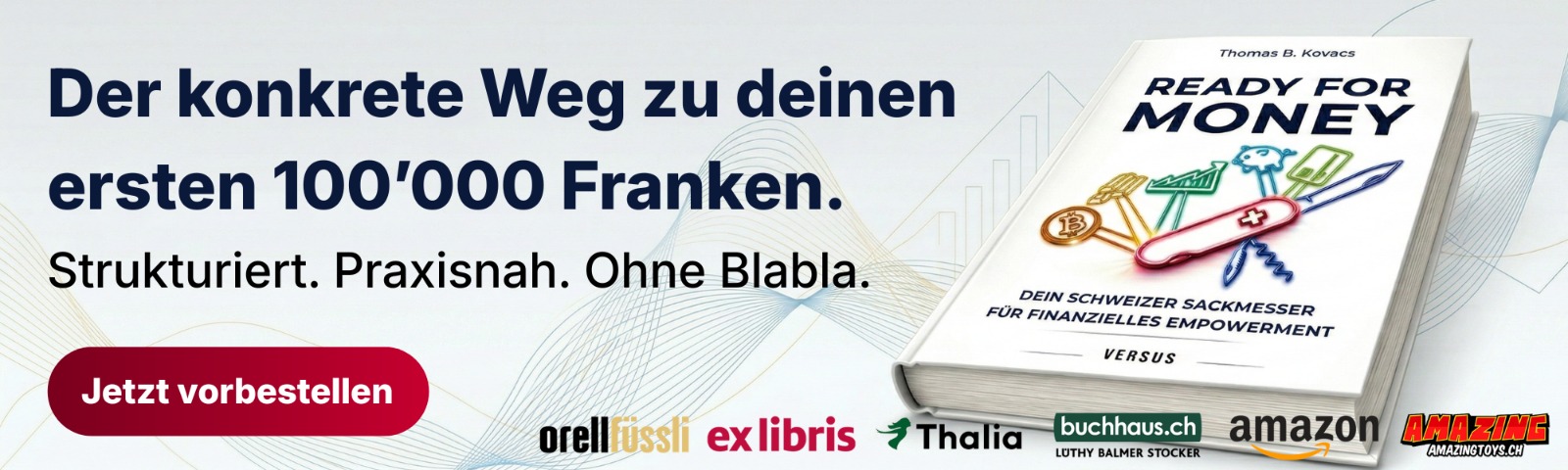
Thomas Kovacs’ new book “Ready for Money” positions itself as exactly what late-blooming Swiss investors need: a structured, practical toolkit rather than motivational fluff. The approach mirrors what experienced investors recommend, treat your financial plan as a Swiss Army knife: versatile, reliable, and designed for local conditions.
The book’s core framework, Verdienen, Sparen, Investieren (Earn, Save, Invest), sounds simple because it is. The complexity lies in the Swiss execution: which ETFs avoid punitive stamp duty, how to handle Quellensteuer on dividends, and when a domestic portfolio still makes sense despite resistance to domestic-only portfolios.
The Numbers That Matter
Let’s cut through the noise with actual math. A 30-year-old earning CHF 85,000 annually who starts maximizing their Säule 3a today with a 5% return reaches CHF 430,000 by age 65. Wait until 40, and that drops to CHF 245,000. The difference isn’t the 10-year delay, it’s the compounding slope you miss.
But here’s the Swiss twist: that CHF 7,056 annual Pillar 3a contribution saves you roughly CHF 2,100 in taxes at a 30% marginal rate. That’s an instant 30% return before any market movement. No stock pick can beat that.
Pitfalls That Punish Late Starters
The Home Bias Trap
Swiss banks love selling domestic products. Raiffeisen portfolios and other bank-proprietary solutions often underperform while charging premium fees. Many investors discover this too late, locked into products with exit penalties. The research shows a heated debate about Switzerland’s stubborn home bias, with good reason: global diversification isn’t just theory, it’s essential when your salary, pension, and real estate are already tied to the Swiss economy.
The Currency Conversion Trap
Interactive Brokers dominates Swiss investing for cost reasons, but the IBKR currency trap catches even savvy users. That $2 conversion fee isn’t the issue, it’s the spread and execution timing that can cost hundreds per transaction. For late bloomers, every franc wasted on inefficient currency conversion is a franc not compounding.
The Dividend Tax Trap
Swiss investors face a 35% withholding tax on Swiss dividends, but foreign ETFs create their own nightmare. The dividend tax implications of foreign ETFs mean that seemingly perfect Ireland-domiciled funds still leak taxes in ways that don’t appear on your broker statement. You only notice when your Steuererklärung (tax declaration) shows a lower refund than expected.
The Alternative Investment Distraction
By 30, you’ve heard the siren calls: crypto, gold, managed futures, REITs. The research shows Swiss investors quietly adding alternatives beyond VT, but this is advanced territory. Your catch-up phase needs boring reliability, not speculative outperformance.
If you’re tempted by gold, understand that Swiss banks will sell you physical gold with storage fees that erode returns. The philoro Edelmetall-Abo (precious metals subscription) might offer CHF 50 starting credit, but that’s marketing, not strategy.
Action Steps for the Next 30 Days
- Open a low-cost brokerage account if you haven’t already. Swissquote offers CHF 200 trading credits with promotion codes, but compare total costs, not just marketing gimmicks.
- Maximize your Säule 3a for the current tax year. Use a provider with transparent fees. The ZKB frankly platform is popular, but calculate whether the convenience justifies any premium.
- Download a compound interest calculator and run scenarios. The psychological impact of seeing actual numbers outweighs abstract advice.
- Audit your insurance policies. Swiss residents over-insure out of caution. Cancel redundant policies and redirect premiums to investments.
- Read one Swiss-specific finance book. Generic international advice breaks on Swiss tax law. “Ready for Money” launched specifically to fill this gap, offering structured guidance from ETF strategies to Bitcoin allocation in a Swiss context.
The Bottom Line
Starting at 30 in Switzerland isn’t a disaster, it’s a reality for most residents who spent their 20s navigating permits, language barriers, and establishing careers. The Swiss system actually rewards late starters who approach it structurally. Tax deductions, mandatory pension contributions, and high earning potential create a catch-up slope steeper than in most countries.
The danger isn’t your age, it’s continuing to treat financial planning as something you’ll figure out eventually. The research shows that companies hiring young Swiss graduates run finance courses because even the educated lack practical knowledge. If you’re 30 and reading this, you’ve already recognized the gap, that’s the real first step.
Your 20s might have been about survival and exploration. Your 30s are about building. In Switzerland, that building comes with a detailed instruction manual, even if nobody handed it to you at graduation. The tools exist. The tax advantages are real. The only question is whether you’ll spend another decade waiting for the perfect moment, or start assembling your Swiss financial toolkit today.
The perfect time isn’t behind you, it’s the moment you stop treating financial literacy as a secret club and start treating it like what it actually is: the most practical skill Swiss schools forgot to teach.