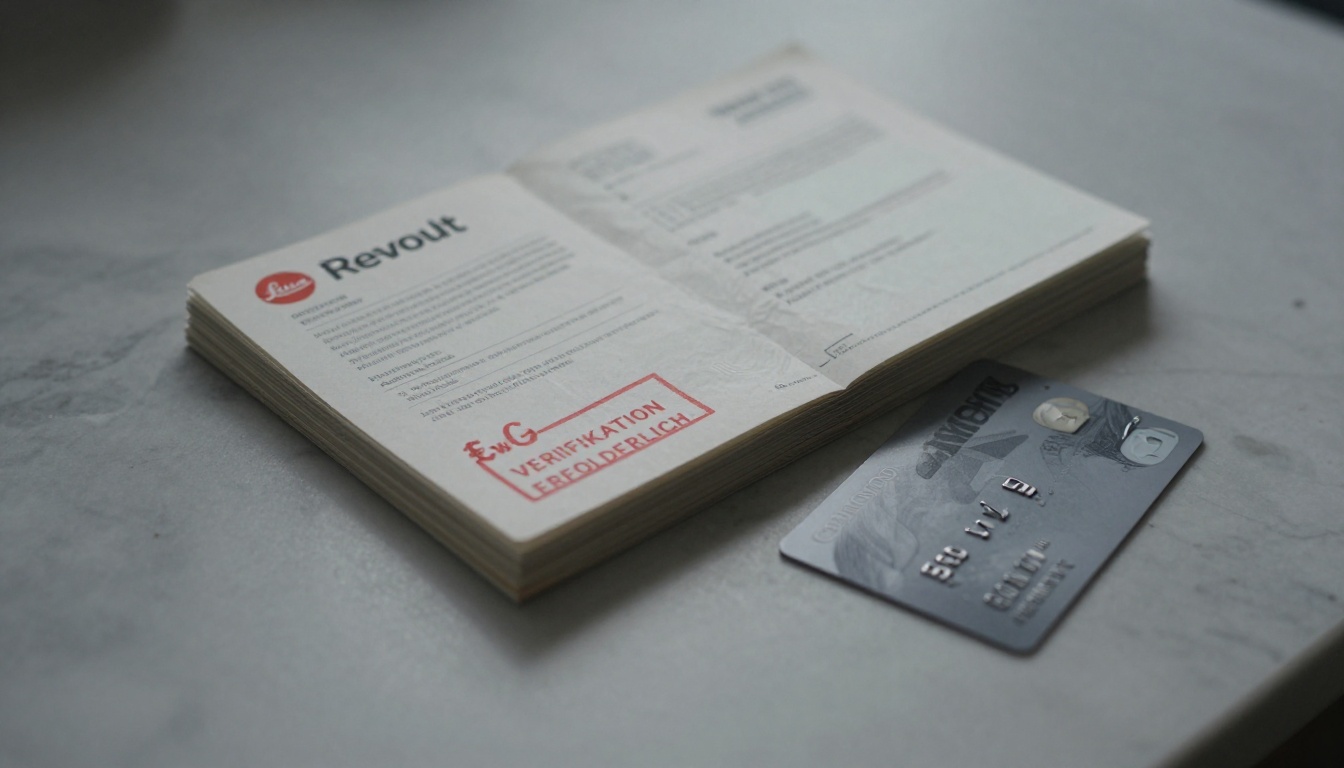
Imagine opening your inbox to find an email from Card Complete (Austrian credit card issuer) demanding three months of Revolut statements and proof of where you got the money. Not because you missed a payment. Not because you maxed out your card. Simply because you’ve been topping up your Revolut account using their credit card. This isn’t a scam, it’s Austria’s anti-money laundering machine in action, and it’s chewing up fintech users across the country.
The Email That Stops Your Digital Banking Flow
The message reads like a formal accusation: “Aufgrund der bestehenden, gesetzlich verankerten Sorgfaltspflichten für Kreditkartenunternehmen ist es uns vorgeschrieben, alle im Rahmen der Geschäftsbeziehung getätigten Transaktionen kontinuierlich zu überwachen und ggf. zu überprüfen.”
(Due to legally mandated due diligence obligations for credit card companies, we are required to continuously monitor and, if necessary, review all transactions made within the business relationship.)
Translation: We’ve noticed you’re sending money to Revolut. Prove you’re not a money launderer.
What triggers this? Regular payments to Revolut. The user in question had simply been using their Card Complete credit card to fund their Revolut account, then making payments and transfers from there. A common pattern for anyone leveraging fintech convenience. But in Austria’s regulatory landscape, routine has become suspicious.
Why Card Complete Wants Your Revolut Statements
This is where the logic bends. Card Complete processes your credit card transaction. They see money leaving your card and landing at Revolut. Under normal circumstances, a credit card company knows where you shop, but not your account balance at the destination. So why the deep dive into your Revolut statements?
The answer lies in Austria’s Geldwäschegesetz (Money Laundering Act), which implements EU AML directives with Austrian thoroughness. Credit institutions must monitor for “unusual transaction patterns.” Regular top-ups to a fintech platform like Revolut, especially if the amounts vary, flag their systems. Unlike traditional bank transfers where they can verify the source account, fintechs create a black box. Card Complete can’t see inside Revolut, so they demand you open it for them.
This creates a peculiar regulatory paradox: you’re guilty until you prove yourself innocent by providing documentation that, ironically, the credit card company shouldn’t theoretically need. They already know your payment source, their own card. What they want to know is what you’re doing after the money leaves their system.
The Compliance Burden on Users
The email demands are specific and invasive:
– A “aussagekräftiger Revolut Kontoauszug” (meaningful Revolut account statement) covering three months
– Proof of funds origin: “Depotauszug, Erbschaftsanzeige, Kontoauszug, etc.” (deposit statement, inheritance notification, bank statement, etc.)
For the average user, this is absurd. You’re essentially being asked to document your entire financial life because you dared to use a modern financial tool. Many international residents in Austria use Revolut precisely because traditional banks like Erste Bank or Raiffeisen make cross-border transactions painful and expensive. Now their workaround triggers a compliance nightmare.
The frustration is palpable. As one user noted, the question “Woher stammen die Mittel für die Zahlungen an Revolut?” (Where do the funds for payments to Revolut come from?) seems circular, the funds come from the Card Complete credit card they’re monitoring. But that’s not what the compliance department wants to hear. They want the original source: your salary, your savings, your inheritance.
Is This Normal or Overreach?
Experienced users in the Austrian financial scene recognize this as a “ganz normale AML-Anfrage” (completely normal AML request). Card Complete is following procedure. The logic goes: they see regular transfers to Revolut, which could theoretically be part of a layering scheme in money laundering. By asking for Revolut statements, they’re checking if the money is being churned or used for suspicious purposes.
But there’s a strong argument that this is compliance theater. When you applied for your Card Complete credit card, you already authorized them to verify your income with your primary bank. They know your financial capacity. Demanding statements from every downstream service creates an endless chain of documentation. What’s next, asking for receipts from every merchant you paid via Revolut?
Some users suspect this might even violate the spirit of data minimization principles in GDPR. But Austrian financial institutions err on the side of extreme caution after several high-profile money laundering scales in recent years. The FMA (Finanzmarktaufsicht – Financial Market Authority) has been aggressive in enforcement, and banks pass that pressure directly to customers.
The Broader Fintech Compliance Squeeze
This isn’t just an Austrian problem, it’s a European fintech paradox. Revolut itself faces similar pressures. In Australia, AUSTRAC fined Revolut Australia $123,000 for late compliance reporting. The UK fintech operates under intense regulatory scrutiny in every market, often without a full banking license, which forces it to maintain even stricter compliance than traditional banks.
The MiCA-Verordnung (Markets in Crypto-Assets Regulation) now fully applicable in the EU creates a harmonized framework that puts investor protection first. While this theoretically makes cross-border fintech easier, in practice it means every transaction is examined under a microscope. The cross-border regulatory pressure on Austrian fintechs operating in Germany shows how even homegrown success stories struggle with different national interpretations of EU rules.
For users, this creates a structural friction in Austrian direct banking systems that punishes digital innovation. You’re caught between traditional institutions like Card Complete, which apply rigid compliance frameworks, and fintechs like Revolut, which offer convenience but trigger those very frameworks.
What Actually Happens If You Ignore the Request?
The comments are clear: “Mitwirken oder rausfliegen” (Cooperate or get kicked out). Card Complete can terminate your credit card agreement if you don’t comply. There’s no room for negotiation. The system is binary: provide documents or lose access.
This power imbalance is stark. As a customer, you’ve broken no law. You’ve simply used your credit card for a legal purpose. Yet you’re treated as a potential criminal, and your financial access hangs in the balance.
The irony? Most users report that after submitting documents, they hear nothing. The compliance department checks a box, and life continues. But you’ve spent hours exporting statements, redacting personal data (if you’re privacy-conscious), and justifying legal behavior. The cost is your time and dignity.
Practical Steps If Card Complete Targets You
If you receive one of these emails, here’s what to do:
1. Verify Authenticity
Contact Card Complete directly via their official website (not by replying to the email). Scammers do imitate banks. The legitimate email should reference your actual card number and come from their official domain.
2. Export Minimal Data
From Revolut, export exactly three months of statements. Redact transaction details that aren’t relevant to the top-ups from Card Complete. You have GDPR rights to protect unrelated personal data.
3. Provide Source Documentation
A single payslip or bank statement showing your salary deposit is usually sufficient. You don’t need to explain every transaction. The law requires “angemessene” (appropriate) documentation, not exhaustive life stories.
4. Document Everything
Keep copies of what you send and when. If Card Complete later claims you didn’t comply, you have proof.
5. Consider Alternatives
If this happens repeatedly, it might be time to switch. Some Austrian banks are more fintech-friendly than others. The regulatory-driven account restrictions in Austrian financial institutions show that Card Complete isn’t alone, but some competitors handle compliance with less customer friction.
The Deeper Problem: When Compliance Eats User Experience
This case perfectly illustrates the core tension in modern finance. Regulations like the Geldwäschegesetz were written for a pre-fintech world where money moved through clearly traceable bank transfers. Now, value flows through apps, cards, and digital wallets in ways the law never anticipated.
Austrian regulators interpret these laws conservatively, prioritizing theoretical risk over real-world user experience. The result is how minor payment failures trigger disproportionate compliance responses across the entire financial sector. A €3 failed direct debit can lock your Amazon Visa. Regular Revolut top-ups trigger AML investigations.
The fintech promise was frictionless global finance. Austrian compliance reality is maximum friction applied indiscriminately. Until the law adapts to digital money flows, or regulators accept that not every fintech user is a money launderer, Austrian residents will keep receiving these emails.
The real scandal isn’t that Card Complete asks these questions. It’s that they have to. And that answering them has become a routine cost of using modern financial tools in Austria.

The Cross-Border Banking Squeeze
For expats and international professionals in Austria, this creates a perfect trap. You need cross-border banking for salary, investments, and family support. Traditional banks charge exorbitant fees, so you turn to fintechs. But using fintechs triggers compliance actions that traditional banks avoid.
The use of fintech platforms like Revolut for cross-border financial strategies has become a calculated risk. You save on FX fees but pay in time and stress dealing with compliance departments that don’t understand modern financial lives.
This is the unspoken cost of Austria’s strict financial oversight. The lack of transparency in Austrian digital banking means you never know what will trigger the next investigation. A metal card advertised as “free” suddenly costs €30. Regular Revolut usage triggers AML review. The system works, crime is deterred, but at the expense of treating every customer as a suspect.
Until Austria’s financial regulators strike a better balance between security and user experience, Card Complete users will keep exporting Revolut statements, and fintech adoption will remain a compliance minefield.