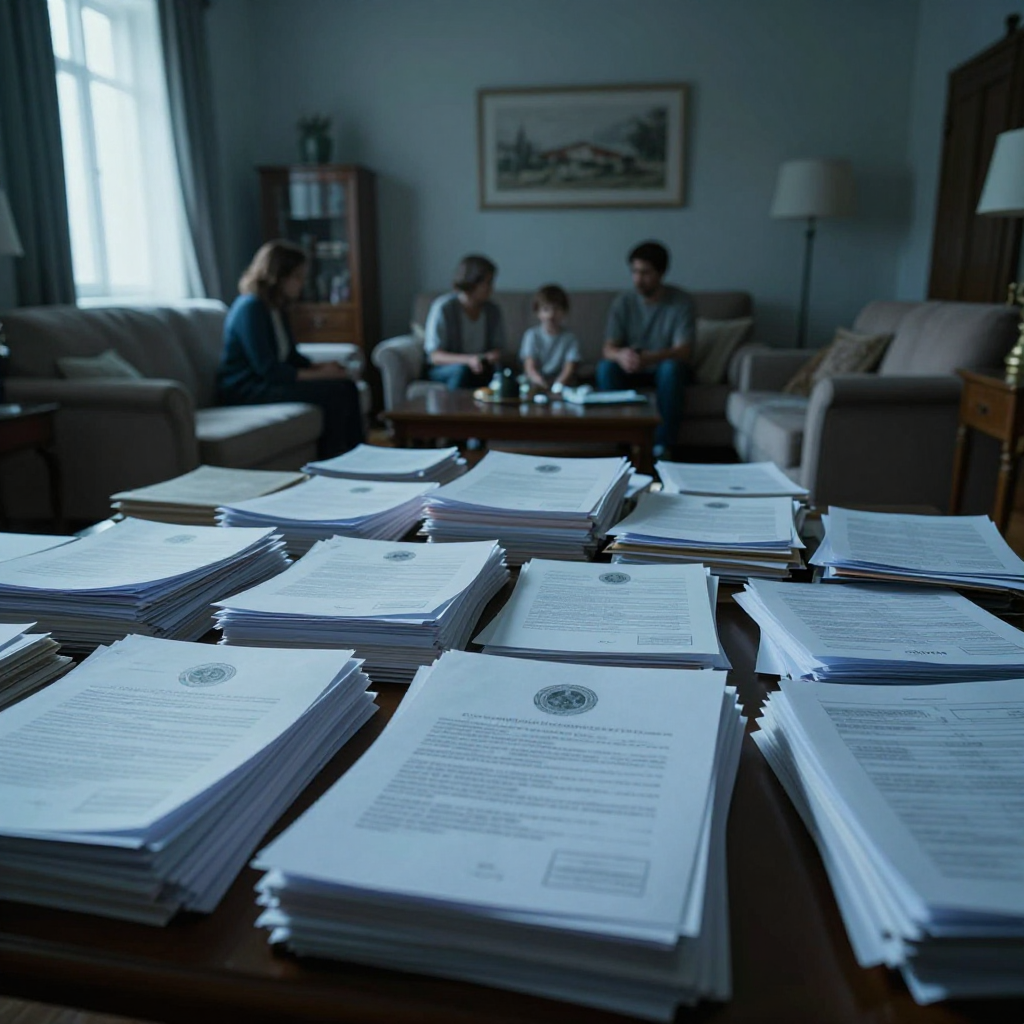
The Austrian Inheritance Trap: Why Your Family Home Guarantees a Legal Nightmare
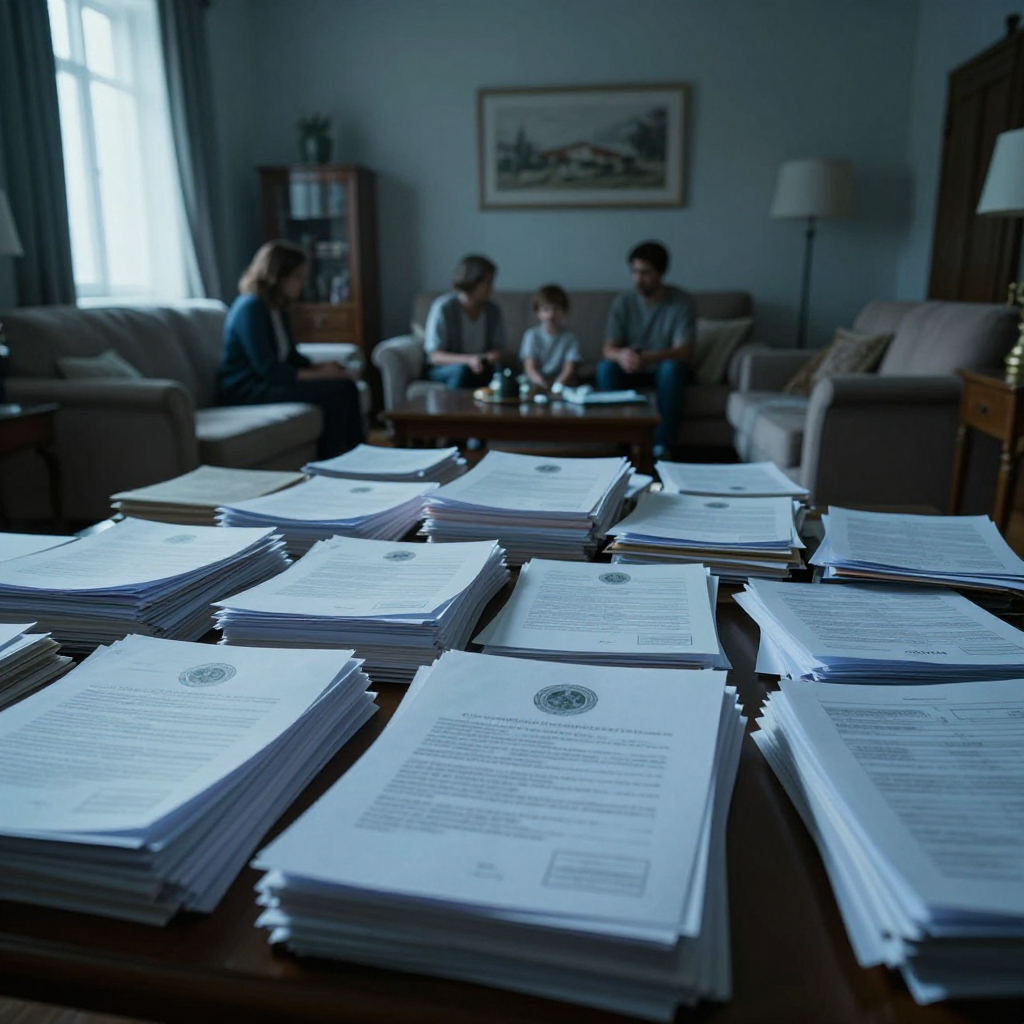
When your grandfather dies in Austria and leaves behind a house in the Vienna suburbs, grief takes a back seat to paperwork. Within days, the family WhatsApp group shifts from condolences to calculations. The second wife stops answering calls. Your mother, who hasn’t dealt with bureaucracy since her Meldezettel (Registration Certificate) renewal, suddenly faces a Verlassenschaftsverfahren (probate proceedings) that could drain her inheritance or force a property sale she never wanted. Welcome to Austrian inheritance law, where the Pflichtteil (compulsory portion) system turns family homes into financial pressure cookers.
The Pflichtteil Trap: Why You Can’t Escape Family
Austrian inheritance law operates on a principle that sounds fair in theory but explodes in practice: certain relatives cannot be completely disinherited. Children, spouses, and parents are entitled to half of what they would receive under statutory inheritance rules. This isn’t a suggestion, it’s a hard legal right that overrides most wills.
The calculation works like this: If your grandfather died with a spouse and two children, each child gets one-third of the estate under statutory rules. Their Pflichtteil is half of that, one-sixth each. The spouse also gets one-third. But here’s where it gets messy: if grandfather wrote a will leaving everything to his second wife, the children still have a monetary claim for their Pflichtteil. They can’t demand the house itself, but they can demand cash equivalent to their share.
This creates an immediate liquidity crisis. A €600,000 house in Innsbruck might represent the entire estate. The second wife, who may have lived there for decades, can’t simply write a check for €200,000 (one-third to the children). She’s forced into three options: take out a loan, sell the property, or negotiate a painful settlement where she pays installments for years.
Many international residents discover this system only after the death. They assume a will is final, like in their home country. Austrian law disagrees. The Pflichtteil is so deeply embedded that even lifetime gifts can be clawed back into the calculation if made within ten years of death. That “gift” your grandfather gave your cousin for a down payment? It might reduce what you’re owed, and you’ll only find out during the Verlassenschaftsverfahren.
When the Second Spouse Becomes the Gatekeeper
The research reveals a specific Austrian scenario that triggers most disputes: the second marriage with children from the first. In these cases, the surviving spouse often controls all information flow. They have legal rights to remain in the property and receive household goods, but they also have motivation to minimize what they share with stepchildren.
One common situation involves a widow who systematically isolated her husband from his children for twenty years. After his death, she controls access to the Notar (notary), the paperwork, and even knowledge of whether a will exists. The children are left guessing, unable to start the Verlassenschaftsverfahren because they don’t know which court has jurisdiction.
Austrian law provides a workaround, but it’s rarely used: children can proactively register themselves with the competent Bezirksgericht (District Court) or Notar as potential heirs. This creates a paper trail that forces the surviving spouse to include them in proceedings. However, most people don’t know this exists, and the widow certainly won’t volunteer the information.
The emotional dynamic makes it worse. The children feel entitled to their Pflichtteil and betrayed by the stepparent. The spouse feels her home is under attack. The result is a standoff where the property sits in limbo, accruing costs, while lawyers calculate fees that will eventually eat into everyone’s share.
The Notar Is Not Your Therapist
Many Austrians believe the Notar will mediate family disputes. This is false. The Notar’s job in a Verlassenschaftsverfahren is administrative: inventory assets, identify heirs, calculate the estate’s value, and ensure legal formalities are met. They are neutral and will not take sides.
During the Todesfallaufnahme (death case recording), the Notar interviews the surviving spouse and any present heirs. If your mother refuses to attend because she can’t face her stepmother, she loses the chance to provide information and hear what the spouse claims. The Notar won’t chase her down. The file moves forward based on what’s presented.
This neutrality extends to questionable processes. While most Notars are diligent, they rely on the information provided. If the surviving spouse “forgets” to mention a bank account or understates the property value, the Notar may not investigate unless challenged. This is why legal representation at the first appointment is crucial, even if it feels confrontational.
A specialized Erbrecht (inheritance law) attorney can represent multiple siblings, ensuring nothing is overlooked. The cost is manageable, often just a few hundred euros for the initial consultation, and can prevent losses worth tens of thousands. Yet many families skip this step, thinking they can trust the process. They can’t.
Tax Bombs No One Talks About
Here’s where Austrian inheritance law becomes financially brutal. The Grunderwerbsteuer (real estate transfer tax) exemption for family transfers sounds generous, spouses and direct line relatives pay 0% when inheriting or receiving gifts. But this doesn’t apply to sales, and it doesn’t protect against Einkommensteuer (income tax) on gains.
If the inherited property was purchased less than ten years before death and isn’t the primary residence, any sale triggers income tax on the profit. A house bought for €300,000 in 2018 and worth €500,000 at death in 2025 creates a €200,000 taxable gain. At Austria’s top income tax rate of 55%, that’s a €110,000 tax bill, more than many Pflichtteil claims.
This tax liability often forces sales that families want to avoid. The second spouse can’t afford to buy out the children and pay the tax. The children can’t afford to waive their Pflichtteil to let her keep the house. The only solution is selling to a third party, which destroys the family asset and likely triggers more tax.
The situation is worse for families holding property through Gesellschaften (companies). The MoPeG reform that took effect January 1, 2024, eliminated the civil law concept of Gesamthandschaft (joint ownership) for partnerships. Several Grunderwerbsteuer exemptions relied on this concept, and a transitional rule runs only until December 31, 2026. After that, family real estate structures could face massive tax bills no one anticipated.
Anticipated Succession: The Gift That Keeps Taking
Vorweggenommene Erbfolge (anticipated succession), where parents transfer property during lifetime, is increasingly popular. Parents think they’re simplifying things. They’re often creating bigger problems.
The legal framework distinguishes between gifts and advances on inheritance. If parents intend a transfer to count against a child’s eventual share, they must explicitly state this in a Schenkungsvertrag (donation contract) with an Ausgleichungsanordnung (equalization order). Without this, the gift is considered separate from the inheritance, and siblings who received nothing can claim their full Pflichtteil from the remaining estate.
The Ausgleichspflicht (equalization obligation) calculation is complex. The value of the gift at the time of transfer is indexed for inflation and added back to the estate for calculation purposes. If one child received a €400,000 house in 2020 and the parent dies in 2025, that gift might be valued at €450,000 for equalization. If the remaining estate is only €100,000, the other children’s Pflichtteil is calculated on a €550,000 base, meaning they claim more than the estate actually holds.
This creates a situation where the child who received the house must pay their siblings from their own assets, not just from their inheritance share. The law caps this at their actual inheritance, but the legal battle to enforce it is expensive and divisive.
Siblings at War: The Equalization Puzzle
When siblings receive unequal lifetime gifts, the Ausgleichungsnachlass (equalization estate) concept determines who owes what. The estate’s value plus the indexed value of all equalization-liable gifts forms the calculation base. Each heir’s share is determined from this total, then reduced by what they already received.
Here’s a concrete example: Three siblings. Parent dies with €100,000 in assets. Child A received a €300,000 house five years earlier (now indexed to €330,000). The equalization estate is €430,000. Each sibling’s statutory share is €143,333. Child A’s Pflichtteil is half that, €71,667. But they’ve already received €330,000, so they get nothing from the estate and owe nothing back. Children B and C each have a Pflichtteil claim of €71,667 against the estate’s €100,000, which they’ll split proportionally.
This seems fair until you realize Child A has no obligation to liquidate the house to pay their siblings more. The Pflichtteil is satisfied by the prior gift. Children B and C feel cheated, but legally they’re receiving exactly what the law guarantees. The emotional damage, however, is permanent.
The only way to avoid this is explicit contractual agreements during the gift transfer. Parents can specify that gifts are outside the inheritance calculation, but this reduces other heirs’ Pflichtteil claims and may be challenged if it appears to circumvent the system’s protective intent.
What You Actually Need to Do: A Checklist
If you’re facing a family property inheritance dispute in Austria, treat it like the financial transaction it is, not the family drama it feels like:
Immediate Steps (Within First Month)
- Identify the competent Notar: Contact the Bezirksgericht where your relative last lived to find which Notar handles the Verlassenschaftsverfahren. Register yourself and all siblings as potential heirs in writing.
- Attend the Todesfallaufnahme: Even if it’s uncomfortable. Bring an Erbrecht attorney. The cost is minimal compared to what you might lose by being absent.
- Request complete file copies: Get all testaments, asset declarations, and the Todesfallaufnahme protocol. Review them with your lawyer within days, not weeks.
- Inventory known assets: List all properties, bank accounts, and valuable items you know about. Provide this to your attorney to cross-check against the Notar’s records.
Financial Protection & Strategy
- Check for Rechtsschutzversicherung: Many policies include a free annual legal consultation. Use it for your initial attorney meeting, even if you’re helping a parent who lacks coverage.
- Freeze the estate if necessary: If you suspect asset dissipation, your attorney can request court measures to secure the property and accounts.
- Calculate Pflichtteil claims early: Don’t wait for the Notar’s calculation. Have your attorney run the numbers based on known assets. This informs negotiation strategy.
- Assess the property’s tax status: Determine if selling triggers Einkommensteuer. This affects everyone’s negotiating position.
- Consider structured buyouts: If one heir wants to keep the property, negotiate installment payments for Pflichtteil claims, secured by the property itself.
- Document everything: All agreements must be in writing and notariell beurkundet to be enforceable. Verbal promises between family members are legally worthless.
The Real Cost of Family Property Disputes
The research shows that 68% of family donation contracts contain invalid clauses, often because people trust vague language like “the property should stay in the family.” Austrian courts consistently reject such formulations as unbestimmt (indeterminate). The BGH ruled in November 2023 that these wishes have no legal force.
The financial cost of getting it wrong is severe. Legal fees in inheritance disputes easily reach five figures. Court proceedings can take two to three years. During this time, the property cannot be sold, rented profitably, or properly maintained. Insurance may lapse. Value deteriorates.
But the human cost is worse. Siblings who negotiated Christmas dinner seating arrangements for decades find themselves unable to speak. The second spouse, who cooked meals for stepchildren, is now a legal adversary. The family home becomes a symbol of betrayal rather than belonging.
Austrian law offers tools to prevent this: clear Schenkungsverträge with Auflagen (conditions), Testamentsvollstreckung (estate administration) by neutral third parties, and early communication about Nachlassplanung (estate planning). But these require confronting mortality and money, conversations most families avoid until it’s too late.
The irony is that the Pflichtteil system, designed to protect family members, often destroys families. It guarantees conflict by creating adversarial positions where emotions already run high. The only winners are the legal professionals billing hourly.
If you’re reading this because you’re already in a dispute, stop hoping for family harmony and start treating it as a business negotiation. Get specialized legal counsel immediately. Calculate the exact financial positions. Negotiate based on numbers, not feelings. And accept that the relationship may be collateral damage, the law essentially ensures it.
If you’re planning ahead, spend the money on proper legal structuring now. A €2,000 attorney fee today can prevent a €50,000 court battle tomorrow. More importantly, it can preserve something more valuable than the property itself: the possibility that your family might still speak to each other after you’re gone.
Related Reading:
- For specific challenges with inheriting a family home in Tyrol, see our analysis of the Tyrol inheritance trap.
- Understand the real tax liabilities on inherited apartments in our breakdown of Erbschaftsteuer realities.
- For broader context on Austria’s inheritance policy debates, read about the inheritance tax rebellion.