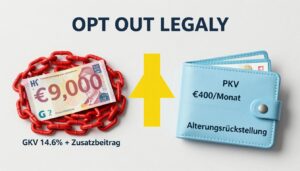
If you’re among Germany’s nine million privately insured residents, your mailbox this December won’t bring holiday cheer. Instead, a cold financial reckoning: 60% of all private health insurance (PKV) members will see premiums jump an average of 13% starting January 2026, according to the Verband der Privaten Krankenversicherung. For a typical family paying €500 monthly, that’s €780 more per year. For older policyholders in comprehensive plans, the pain runs into four figures.
The numbers feel abstract until they hit your bank account. And unlike statutory insurance (GKV), where employers split costs and the government caps contributions at the Beitragsbemessungsgrenze (€5,812.50 monthly in 2026), PKV members shoulder these increases alone. The kicker? This isn’t about insurer greed. It’s about a system designed to hide inflation until it explodes.
Why Hospital Bills Are Breaking the System
The private insurance association points to a “permanently strong increase in medical benefit expenditures.” Translation: hospital costs jumped 10% in 2024, nursing costs skyrocketed 17.57%, and the number of inpatient treatments for privately insured patients rose 10.9% between 2022-2024.
The math is brutal. Private insurers paid nearly €7 billion for hospital services last year. Nursing costs alone hit €27 billion. Each component, energy for hospitals, medical equipment, staff salaries under new collective bargaining agreements, ticks upward relentlessly. The 1996 private fee schedule (GOÄ) hasn’t been updated in decades, but modern treatments like the 2018-approved shingles vaccine show how innovation drives costs: PKV spending on this single vaccine shot from €8 million in 2019 to €109 million in 2023.
Outpatient care tells the same story. Pharmaceutical costs rose 10% year-over-year. Physical therapy and rehabilitation (Heilmittel) jumped 9%. Even routine doctor visits increased 8%. Neurology and psychiatry saw 13.6% spikes as mental health demand surged post-pandemic.
The 10% Threshold Trap
Here’s what makes the 2026 hikes particularly vicious: PKV insurers can only raise premiums when actual expenditures exceed calculated costs by more than 10%. Some contracts have lower thresholds, but most use this legal minimum.
This creates a perverse cycle. If costs rise 8% annually for three years (a typical pattern), insurers must absorb those increases. No adjustments allowed. Only when cumulative inflation breaches 10% can they act, and then they recoup all those suppressed increases at once. Three years of 8% inflation totals 26%. The 2026 hikes aren’t just about 2025’s costs, they bundle several years of stealth inflation into a single, shocking invoice.
Many privately insured members report individual hikes far exceeding the 13% average. One commenter noted a 34% jump plus a higher deductible, effectively a 40-45% cost increase. Another reported 16% at Signal Iduna. These outliers typically involve older policyholders or plans that hit their threshold simultaneously.
The GKV vs. PKV Fork in the Road
Statutory insurance faces its own crisis. TK chief Jens Baas warns the average GKV surcharge will exceed 3% in 2026, pushing total contributions toward 20% of gross income. The government’s cost-control package stalled in the Bundesrat, leaving statutory funds scrambling.
Yet the dynamics differ fundamentally. GKV contributions rise with income until hitting the €5,812.50 cap. High earners pay about €1,030 monthly (employer + employee share). PKV costs depend on entry age, health status, and selected coverage. A 35-year-old in a basic private plan might pay €300-400, a 60-year-old in premium coverage can pay €700-800. Both face inflation, but PKV members absorb the full increase personally.
The critical insight: Over the past two decades, private insurance premiums increased slower than statutory insurance, averaging 3.4% annually versus 3.9% for GKV. This year’s 13% spike partly reflects catch-up. The system postponed adjustments until they became unavoidable.
What This Means for Your Wallet
For high earners above the GKV contribution cap, private insurance often remains cheaper even after hikes. A €700 PKV plan still beats €1,030 in statutory contributions. The calculation shifts for mid-income earners approaching the cap or those with family plans where each child adds cost (unlike GKV, where children are free).
The real danger zone is retirement. PKV premiums don’t automatically drop when income does, unlike GKV, which scales with pensions. The “Altersrückstellungen” (age reserves) built into premiums help, but many underestimate how much they’ll need to budget for healthcare in their 70s and 80s.
Members receiving refunds for low claims (typically 2-3 months’ premiums) see some buffer, but these rebates shrink as you age and use more services.
Action Steps Before Your Bill Arrives
First, verify your insurer’s specific increase. The 13% average masks wide variation. If yours exceeds 20% and you’re under 45, start calculating.
Second, check your contract for “Anpassungsklauseln.” Some newer plans have lower adjustment thresholds, meaning more frequent but smaller hikes. Older plans with 10%+ thresholds hit less often but harder.
Third, model your total retirement costs. Use your insurer’s projection tools. If the 2026 hike strains your budget, future increases will be worse.
Fourth, consider tariff adjustments. Downgrading from premium to standard coverage mid-contract is difficult, but some insurers offer “Tarifwechsel” options. The new tariff uses your current age for calculation, potentially cheaper than staying put, though underwriting reapplies.
Fifth, compare the GKV switch point. If you’re within 10 years of the Beitragsbemessungsgrenze, run the numbers. Switching back to statutory insurance is only possible before age 55 (with exceptions). Missing that window locks you into PKV for life.
The Uncomfortable Truth
Germany’s two-tier insurance system worked fine when medical inflation stayed predictable. It no longer does. The 10% adjustment threshold, meant to protect consumers from arbitrary hikes, now functions as a lag mechanism that amplifies shocks.
For privately insured members, 2026 isn’t just a bad year, it’s the year the system reveals its structural stress. The question isn’t whether premiums will keep rising, but whether your financial plan accounts for healthcare costs that could double every 6-7 years at current trajectories.
Check your mailbox. Then check your math. One of them doesn’t add up anymore.