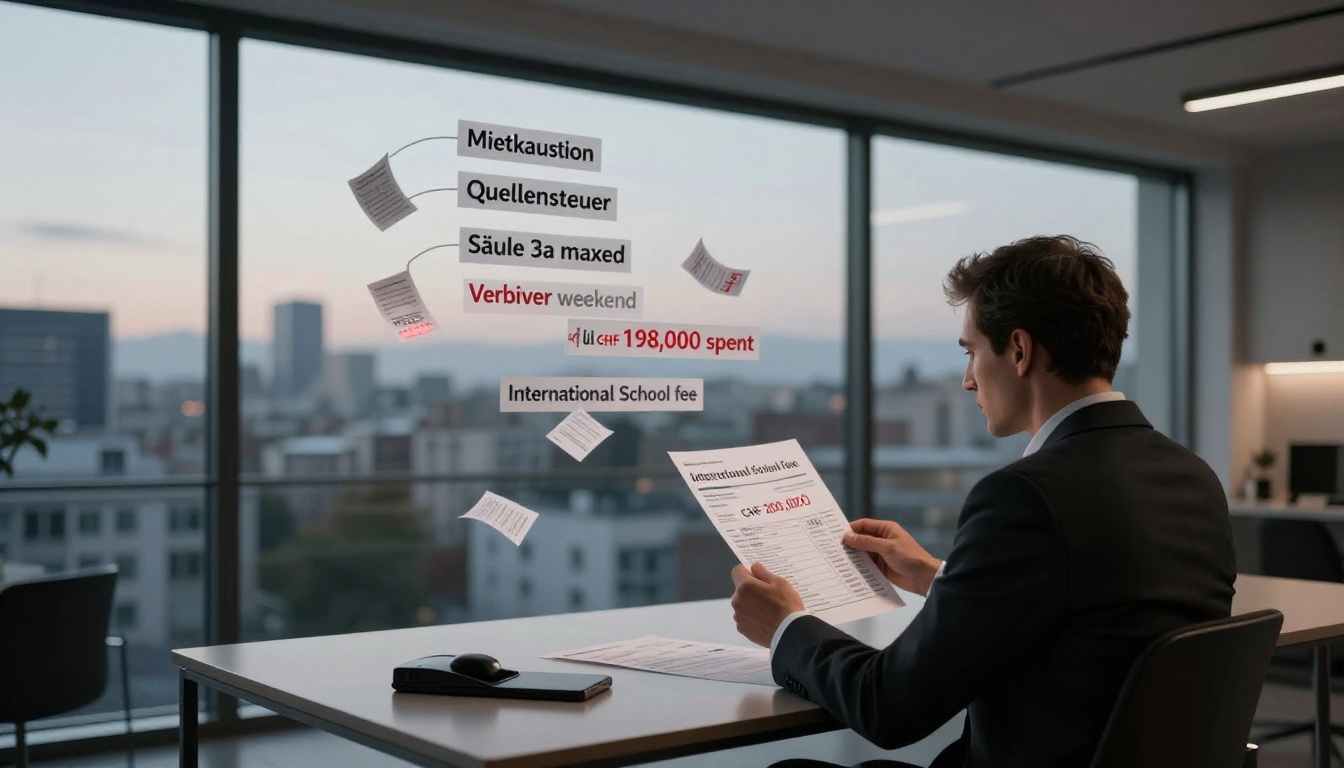
The math seems simple: earn 200,000 CHF annually, and wealth should follow like clockwork. Yet across Zurich’s banking district and Geneva’s international organizations, a surprising number of professionals pulling in these salaries have balance sheets that would make a recent graduate wince. The Swiss personal finance community has been buzzing about this disconnect, and the reasons reveal more about Swiss society than any tax return could.
When Your Salary Peaks But Your Net Worth Flatlines
A tax advisor working with high-income individuals and expatriates in Switzerland sees this pattern regularly, even among clients earning multiples of 200k. The culprit isn’t market crashes or medical emergencies. It’s spending levels that scale exponentially with income, driven by something uniquely Swiss: the pressure to match a lifestyle that many locals fund through entirely different means.
The phenomenon is so common it has a name in financial circles: Lifestyle-Inflation (lifestyle inflation). Each salary bump becomes justification for upgrading the apartment in Zurich’s Kreis 4, the ski weekends in Verbier, or the mandatory private school in the suburbs. What starts as a celebration of professional success becomes a spending treadmill that accelerates faster than income can support.
The Real Cost of Swiss Living Eats First
Before judging the spenders, consider the baseline. Switzerland’s cost structure devours high salaries with remarkable efficiency. A single person needs CHF 2,500, 3,500 monthly just to live modestly, and families of four require CHF 6,500, 8,000+ in cities like Zurich or Geneva. Housing alone consumes 25-35% of income, with city-center two-bedrooms hitting CHF 2,000, 2,800.
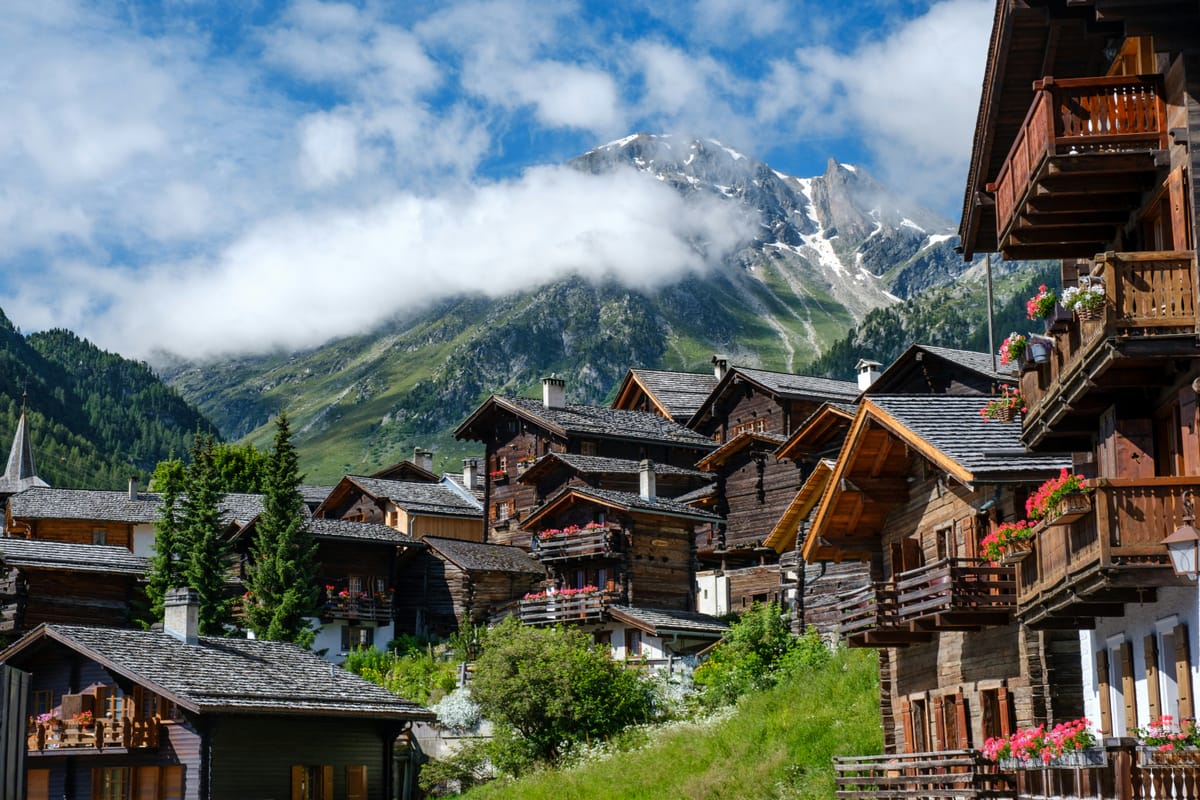
But these are modest living figures. High earners don’t live modestly. They face CHF 1,900/month health insurance for families, CHF 8,000-12,000 annually to own a car, and CHF 25-40 per person for a basic restaurant meal. The numbers compound quickly, and that’s before the psychological spending kicks in.
The Appearance Game: Why “Looking Successful” Bankrupts You
Here’s where Swiss social dynamics create a perfect storm. Many Swiss natives and long-term residents operate with a financial backstop that expats lack: Erbschaft (inheritance). Conversations about future property payouts are casual dinner topics. This creates a spending culture where saving aggressively feels optional when a family home in Thun or Basel will eventually transfer wealth.
Expats and international hires, lacking this safety net, try to keep pace anyway. The result is brutal: attempting to match the consumption patterns of peers who aren’t actually saving either, but who face radically different long-term financial pictures. As one tax advisor noted, the desire to keep up with peers who appear even more successful plays a significant role in draining accounts.
The appearance pressure manifests in subtle ways. Designer brands on every commuter in Geneva. The assumption that a CHF 100 dinner is casual. The expectation that you’ll join the weekend trip to Milan or the ski week in Zermatt. Each decision seems small, but collectively they create a Mietkaution (rental deposit) of opportunity cost that compounds into hundreds of thousands of missed savings.
The Tax Reality Check: Why 200k Becomes 120k Fast
Many high earners dramatically underestimate their true tax burden. Marginal income tax rates in Switzerland can exceed 49% depending on the canton, and that’s before AHV/AVS (Old Age and Survivors’ Insurance) and pension contributions. On a 200k salary in Zurich or Vaud, you’re easily losing 70k+ to taxes alone.
This is where how progressive Swiss taxation, especially in Vaud, can erode high incomes through unexpected effective tax rates becomes painfully relevant. The progressive system means each raise pushes you into higher brackets, but the psychological impact is delayed. You see the gross number, budget based on the previous net, and wonder where the money went.
The math is sobering: 200k gross becomes roughly 130k net after taxes and social contributions. Subtract CHF 36,000 for a modest apartment, CHF 12,000 for mandatory health insurance, CHF 6,000 for transport, and CHF 18,000 for groceries, and you’ve got CHF 58,000 left. That’s CHF 4,833 monthly for everything else, savings, entertainment, travel, clothing, and the inevitable Swiss surprises like your Gemeinde (municipality) charging CHF 800 for a parking permit.
The Investment Discipline Deficit
High income creates a dangerous illusion: the belief that you can always earn more tomorrow. This security breeds complacency. Many professionals max out their BVG/LPP (occupational pension) contributions but never touch a Säule 3a (Third Pillar) or taxable investment account. They confuse pension contributions with wealth building, ignoring that these funds are largely inaccessible until retirement.
This false sense of security is why why relying solely on pension returns can create a false sense of wealth and hinder proactive investment resonates with so many Swiss residents. Your pension statement might show a healthy projected pot, but it’s not money you can use to buy property, start a business, or handle a career change at 45.
The disciplined few who do invest often start too late. How delays in retirement planning, like late 2nd pillar buy-ins, reduce wealth-building momentum shows how missing early years of compounding creates a hole that higher later contributions can’t fill. A 30-year-old investing CHF 1,000 monthly builds more wealth than a 45-year-old investing CHF 3,000 monthly, thanks to the Zinseszins (compound interest) effect.
The Social Spending Trap
Weddings become destination events in Tuscany. Birthday dinners require CHF 200 contributions. The colleague’s goodbye party means CHF 80 for drinks. These social costs scale with income level, nobody suggests the 200k earner split a pizza when the group wants the tasting menu.
Expats face additional pressure. Family back home assumes Switzerland equals unlimited wealth, creating remittance expectations. Friends visiting expect you to host them for a week and show them the “real” Switzerland, which somehow always involves CHF 80 mountain train tickets and CHF 35 cheese fondues.
The result is what financial advisors call “death by a thousand cuts”, each social obligation small, but collectively forming a river of outflows that drowns savings goals.
Breaking the Cycle: What Actually Works
The high earners who do build wealth share common behaviors that have nothing to do with salary:
- They treat savings as a fixed cost. Before any discretionary spending, they automatically transfer 20-30% of net income to investment accounts. This is the importance of disciplined financial goal setting despite high income, a key factor in avoiding lifestyle inflation in action.
- They understand their true tax burden. They use tax calculators and plan around marginal rates, making informed decisions about bonus timing, pension buy-ins, and cantonal moves.
- They separate social spending from wealth signals. They’ll attend the wedding but book their own accommodation. They’ll join the dinner but skip the CHF 300 wine upgrade. They recognize that the challenge of achieving high savings rates in Switzerland despite high salaries requires saying no to incremental luxuries.
- They leverage Swiss-specific advantages. They max out Säule 3a contributions for the tax deduction, use Quellensteuer (withholding tax) optimizations if eligible, and understand how how high earners can leverage or overlook Second Pillar 1e plans for wealth accumulation.
- They plan for the inheritance trap. Expats especially recognize that the risk of losing accumulated pension wealth to inflexible payout structures, undermining long-term net worth means they can’t rely on Switzerland’s pension system alone. They build parallel wealth outside the system.
The Hard Truth About Swiss Wealth
Switzerland’s median net worth peaks at ages 55-64 around CHF 241,100, but this masks enormous inequality. The top 10% in that age group hold over CHF 1 million while the median household struggles. For high earners under 45, the gap between income and net worth is often stark, a Gini coefficient of 0.80 shows extreme wealth inequality in younger age brackets.
The uncomfortable reality is that in Switzerland, a high salary is necessary but not sufficient for wealth. The system is designed to reward those who understand its intricacies: the tax optimization strategies, the pension system gaps, the regional cost differences, and most importantly, the psychological discipline to ignore the consumption cues surrounding you.
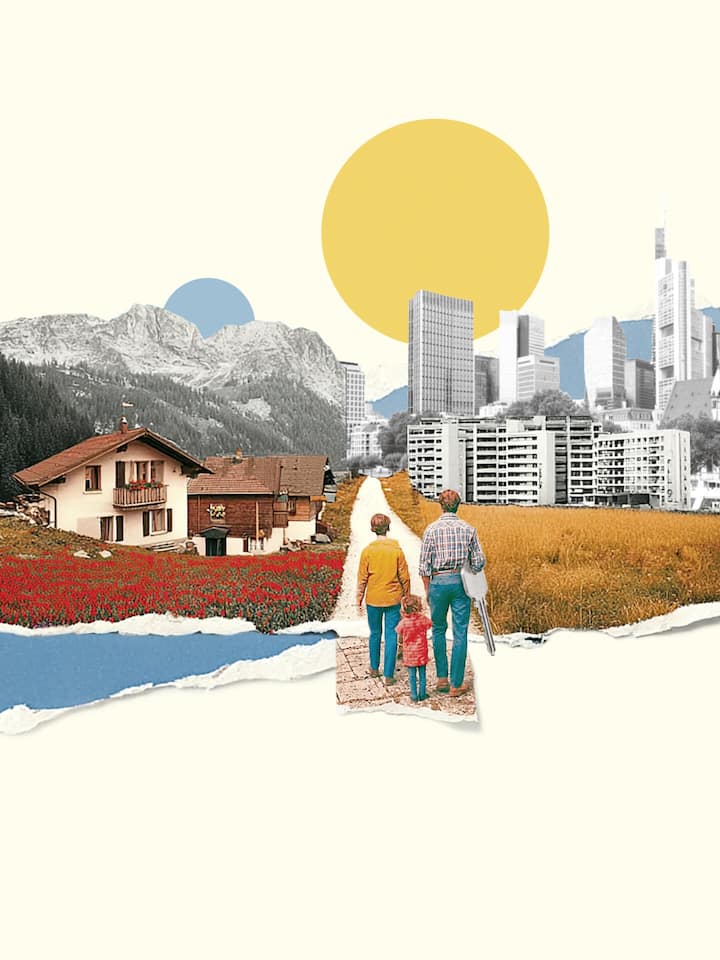
Whether you’re an expat trying to build security without family support or a Swiss professional navigating inheritance expectations, the formula remains the same: income is what you earn, but wealth is what you keep and grow. In Switzerland’s high-cost, high-pressure environment, that requires more than a good salary, it demands a system.
The good news? Once you see the trap, you can step around it. The bad news? Most people don’t realize they’re caught until they hit 50 and wonder where the money went. By then, the compound interest train has left the station, and no amount of salary can buy you a ticket for the ride you missed.