ETF Broker Fee Wars: How Hidden Costs Eat Into Swiss Investors’ Returns

Swiss investors have mastered the art of picking low-cost ETFs. They obsess over TERs (Total Expense Ratios) and swap accumulating for distributing funds to optimize taxes. Yet most are hemorrhaging returns through a blind spot that’s far more damaging: broker fees. A newly launched Swiss broker fee calculator pulls back the curtain on this silent wealth killer, revealing cost differences that can exceed CHF 26,000 over a typical investment horizon. The tool, built by a local developer and hosted at etfschweiz.ch, has sparked heated debates about whether Swiss investors are sacrificing convenience for savings they never actually see.
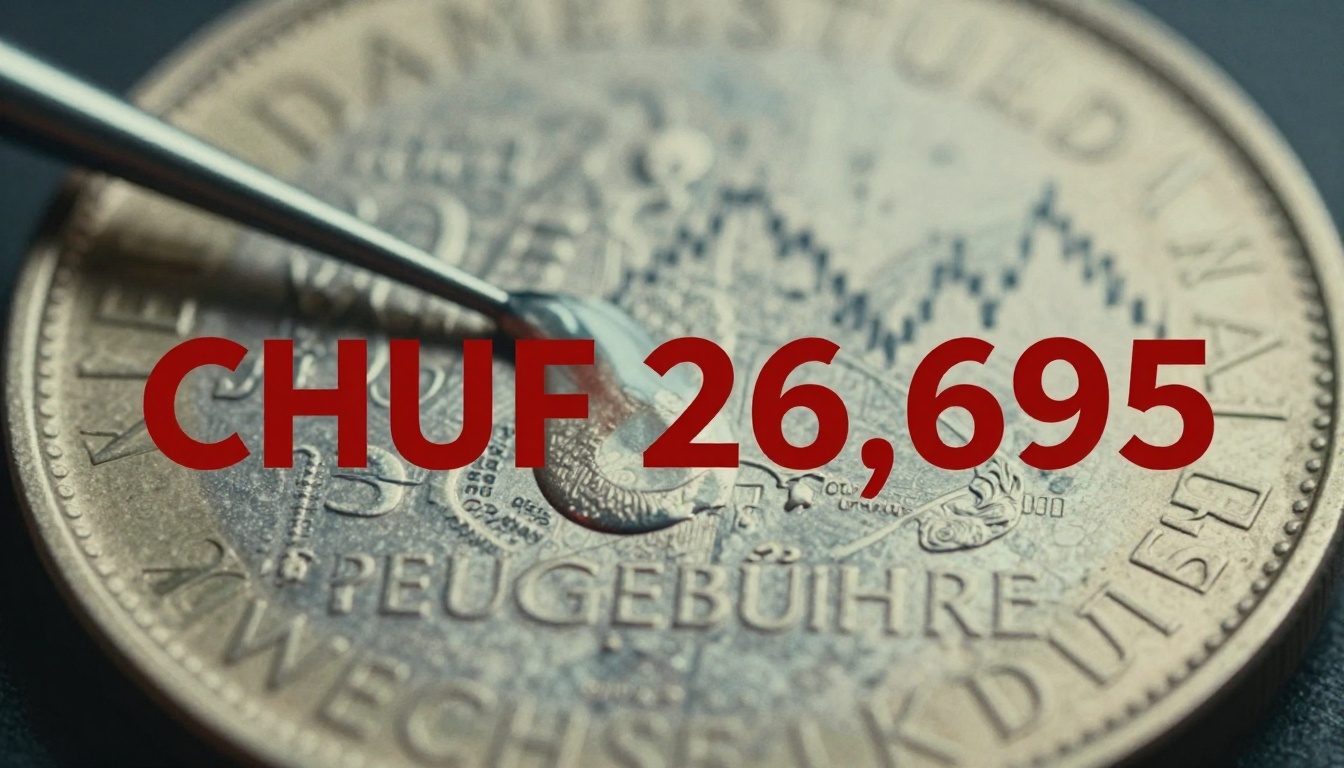
The CHF 26,695 Question That Brokers Won’t Ask
Plug CHF 20,000 starting capital, CHF 500 monthly contributions, 5% annual growth, and a 25-year timeline into the calculator. The results trigger a double-take. Saxo Bank emerges as the cheapest option at CHF 1,995 in total costs. Zürcher Kantonalbank (ZKB) sits at the opposite end, demanding CHF 28,689 for the same investment journey. That’s not a typo, the difference amounts to CHF 26,695, enough to buy a small car or fund two years of early retirement.
The calculator’s creator, who spent weeks dissecting broker PDFs, intentionally kept the model simple: one world ETF in CHF traded on SIX. This stripped-down approach exposes how even “small” fee differences compound into life-altering sums. A commenter on the original forum post noted that Saxo’s selling fees are higher than Swissquote’s, yet Saxo still wins overall because its purchase costs and zero custody fees create a larger final portfolio, which then incurs higher stamp duty upon sale. The irony: cheaper brokers can appear more expensive on taxes simply because they leave you with more wealth to tax.
The Hidden Cost Menu: What Your Broker Isn’t Itemizing
Swiss brokers advertise transparent pricing, but the devil lives in the footnotes. The calculator breaks costs into four categories: purchase fees, selling fees, custody fees, and stamp duty (Stempelsteuer). Yet even this breakdown omits the most insidious wealth leak: currency conversion.
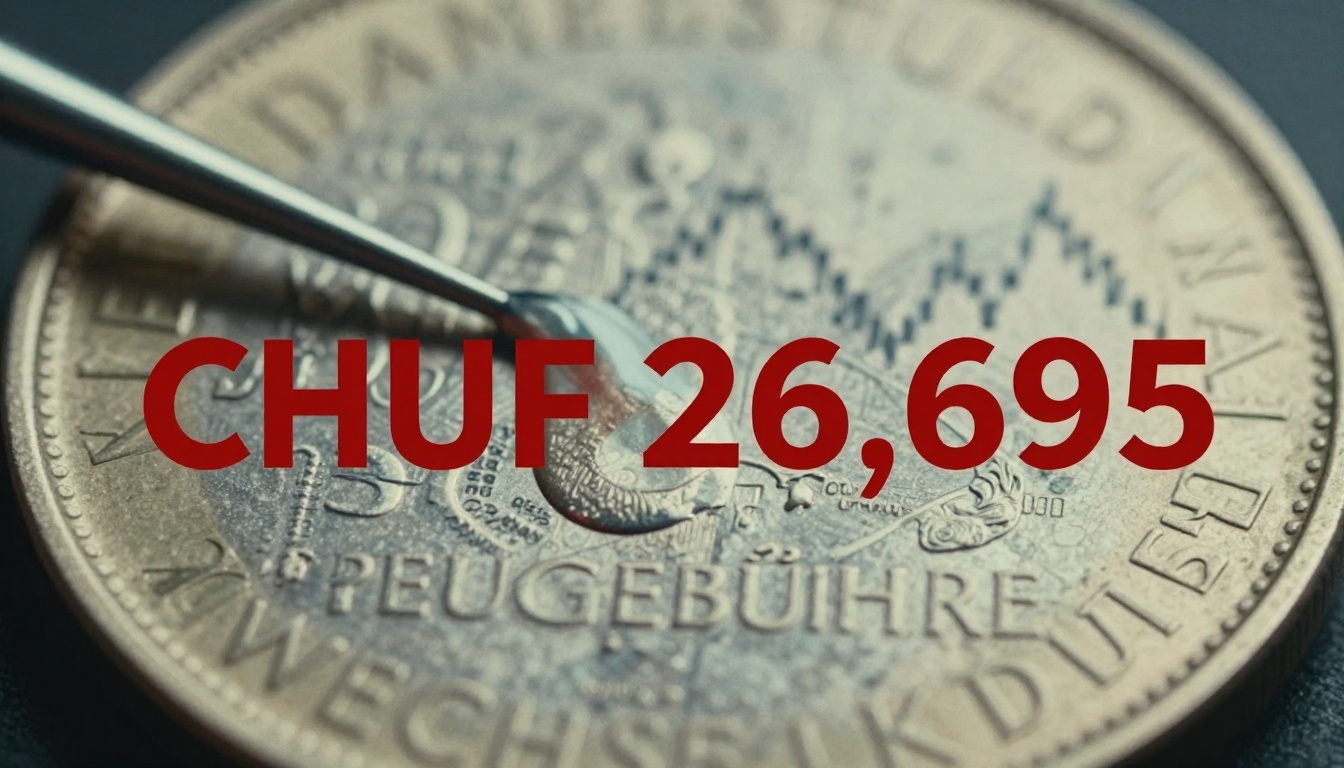
Currency conversion fees (Wechselkursgebühren) represent the single largest hidden cost block for Swiss investors buying foreign ETFs. Interactive Brokers (IBKR) charges a flat $2 per conversion at near-interbank rates. Saxo Bank takes 0.25%. Swissquote pockets roughly 0.95%. On a CHF 10,000 conversion, that’s CHF 2 versus CHF 95, a 4,650% difference. For investors dollar-cost averaging into US-listed ETFs like VT or VOO, this annual fee drag can cost thousands over a decade. Many who chased cost savings from switching to low-fee brokers like Interactive Brokers discover this stealth tax only after their first statement arrives.
Custody fees (Depotgebühren) look innocent on paper, often 0.1% to 0.24% annually, until you realize they apply to your entire portfolio value. A CHF 100,000 portfolio at a traditional bank charging 0.24% pays CHF 240 yearly, regardless of trading activity. Over 20 years, that’s CHF 4,800 for literally doing nothing. Digital brokers like Saxo, Yuh, and neon have eliminated this fee entirely, forcing traditional banks to justify charges that now feel like paying rent on your own money.
Minimum fees punish small investors most brutally. A broker advertising “0.5% trading fees” with a CHF 10 minimum means a CHF 500 monthly investment costs 2%, four times the advertised rate. This structural penalty pushes beginners toward expensive Swiss mutual funds instead of ETFs, locking them into high-cost products from day one.
The Stamp Duty Mirage
The Stempelsteuer (stamp duty) confuses even experienced investors. At 0.15% for foreign securities, it’s not a broker fee but a state tax applied uniformly across Swiss providers. The calculator includes it in total costs, which sparked debate about whether this unfairly advantages foreign brokers like IBKR that don’t charge it.
Here’s the catch: cheaper brokers generate larger portfolios, which creates higher absolute stamp duty upon sale. The calculator’s logic is sound, total cost matters, but it reveals a psychological trap. Investors see the stamp duty line item and blame the broker, not realizing it reflects their own investment success. As one user pointed out, failing to separate taxes from fees makes foreign brokers appear artificially superior. The solution isn’t to ignore stamp duty, but to understand it’s a success tax, not a broker penalty.
Tax Reporting: The CHF 50/Year Convenience Tax
Swiss brokers provide a free e-Steuerauszug (electronic tax statement) that imports directly into cantonal software in seconds. IBKR doesn’t. Swiss investors must manually transfer data from activity reports, a process that takes hours and risks costly errors. Since 2025, the Swiss company datalevel has offered a workaround for CHF 50 annually, but that’s another hidden cost that tips the scales back toward domestic providers.
For a CHF 30/hour worker, spending four hours on tax reporting “saves” CHF 120, more than the trading fee difference between IBKR and Saxo for most portfolios. This time cost rarely appears in fee comparisons, yet it’s a real expense that tax reporting challenges with Interactive Brokers for Swiss investors make unavoidable. The question shifts from “Which broker is cheapest?” to “How much is your time worth?”
The ETF Savings Plan Loophole
Saxo Bank, Yuh, and neon offer free ETF savings plans (Sparpläne) for monthly investments, eliminating purchase fees entirely on select funds. For the CHF 500/month investor in our example, this saves CHF 850 in purchase costs over 25 years compared to manual trades. The calculator accounts for this, but many investors overlook the requirement to transfer money in advance, there’s no direct debit from your salary account.
IBKR offers “Recurring Investments” but charges ~CHF 1.50 per execution and operates only in English. The platform’s complexity overwhelms beginners, while Saxo’s German interface and free savings plans deliver a smoother experience. For hands-off investors, the convenience premium of a Swiss broker might actually be negative, they pay less through savings plans than they would at IBKR.
When Zero-Fee ETFs Aren’t Zero Fee
The obsession with broker fees sometimes distracts from ETF-level costs. A zero-TER gold ETF might secretly charge 0.36% through storage and spread costs. Similarly, hidden costs in seemingly zero-fee ETFs can exceed broker fees for buy-and-hold investors. The calculator wisely excludes TER from its model, but this means investors must still scrutinize fund-level drag.
Irish-domiciled ETFs, popular among Swiss investors for their tax efficiency on US dividends, carry a 15% withholding tax that can be reclaimed via DA-1 form. US-listed ETFs face the same tax but require additional paperwork (R-US 164) when held through Swiss brokers. This nuance, explored in dividend withholding tax differences between Ireland and US ETFs, adds another layer of hidden cost that depends on broker choice and domicile.
The Real Cost of Foreign Brokers
IBKR’s low trading fees and interbank currency rates make it mathematically unbeatable for large, frequent traders. But the total cost equation must include regulatory complexity. IBKR lacks FINMA regulation and Swiss deposit protection. Your contract sits with IB UK, subject to FCA rules, while securities custody falls under SEC oversight. This regulatory fragmentation introduces hidden currency conversion fees on Interactive Brokers and inheritance complications that can cost heirs thousands in legal fees.
US estate tax, theoretically zero for most Swiss investors thanks to a $15 million exemption, still requires heirs to file IRS Form 706-NA with notarized English translations of death certificates and inheritance documents. For a CHF 500,000 portfolio, the paperwork alone can cost CHF 2,000-5,000 in advisor fees, erasing decades of trading fee savings.
The Verdict: Calculate Your Personal Fee War
The broker fee calculator is a weapon, not a prophecy. It exposes the raw numbers but can’t decide your risk tolerance or time value. A 25-year-old investing CHF 200 monthly should prioritize zero-fee savings plans at neon or Yuh. A CHF 50,000 lump-sum investor might tolerate ZKB’s high fees for the comfort of walking into a branch in Zurich. A US ETF enthusiast with CHF 10,000 monthly flows will save thousands at IBKR despite the tax hassle.
The controversial truth: there is no universally “best” broker, only the one whose hidden costs align with your behavior. Swiss banks have weaponized complexity to mask fees, new tools finally arm investors to fight back. But the victory isn’t always choosing the cheapest option, it’s paying only for what you actually value.
Before your next trade, spend ten minutes with the calculator. Input your real numbers. Then ask: is saving CHF 100/year worth switching brokers, or would you rather spend that time hiking in the Alps? The Swiss financial system operates with the same reliability as an SBB train, usually impeccable, until construction slows the line. Your job is to know whether you’re on the express or the local.