Switzerland’s consumer sentiment has taken a sharp turn heading into 2026. According to recent data, roughly one-third of the population plans to tighten their belts and save more, with that figure jumping to 41% among those under 45. The sentiment runs even deeper in French-speaking regions like Vaud and Tessin, where 61% of residents describe their financial situation as tense, difficult, or critical. This regional anxiety is precisely what’s driving a quiet revolution in how Swiss residents think about their banking relationships.
The math seems simple enough: traditional banks charge monthly fees that can exceed 100 CHF annually, while neobanks offer zero-fee accounts with competitive features. But the decision to switch reveals a more complex calculus about what “convenience” truly means in Swiss banking culture.
The Cost of Tradition
For decades, Swiss banking meant walking into a branch, greeting your advisor by name, and handling transactions with a sense of personal service. PostFinance, the postal bank that serves as a default choice for many, epitomizes this model. Yet their account fees, while modest, add up, especially when you factor in charges for paper statements, certain transactions, and the opportunity cost of not optimizing your money.
Migros Bank presents itself as a cheaper alternative within the traditional framework. Their basic accounts carry minimal fees, and you can withdraw cash free at Migros supermarkets and their ATMs. For a resident of Vaud seeking to reduce costs while keeping one foot in the familiar world of physical banking, this seems like a reasonable compromise. The catch? You’re still paying for infrastructure you might not use, and their digital features lag behind newer competitors.
Zürcher Kantonalbank (ZKB) gets mentioned frequently as a reliable option, but it’s a cantonal bank, meaning its physical presence is strongest in German-speaking Switzerland. For someone in Vaud, the branch network thins considerably, eroding the “convenience” advantage while still charging traditional bank fees.
The Neobank Invasion: Not Just for Tech Bros
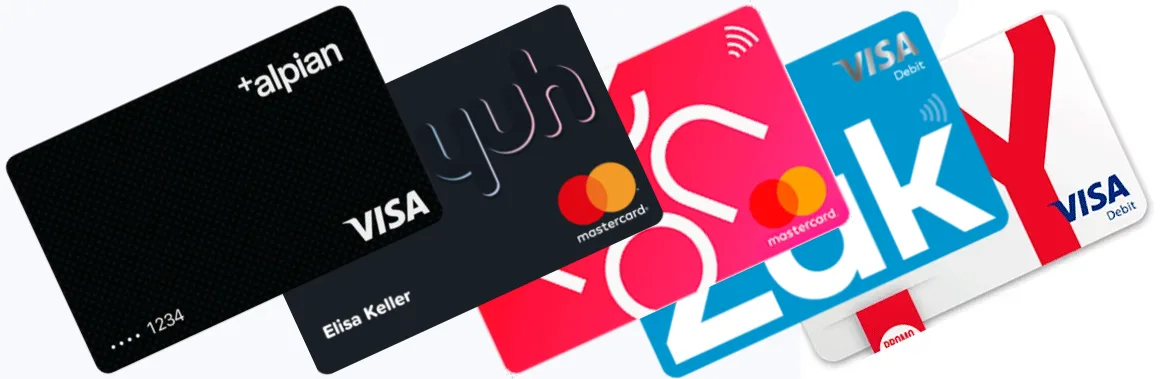
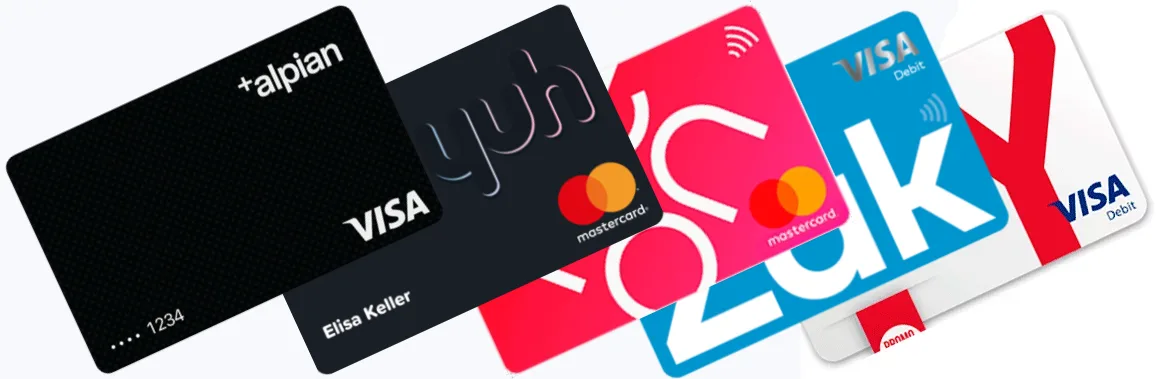
The Swiss neobank landscape has matured dramatically. According to December 2025 rankings, four domestic players dominate: Yuh (topping the charts at 22/22 points), Neon (19 points), Alpian (18 points), and Zak (16 points). They’ve built their offerings around a simple premise: why pay for physical branches when you can do everything on your phone?
Yuh, a joint venture between Swissquote and PostFinance, offers the most compelling package for cost-conscious consumers. The account is genuinely free, includes a debit Mastercard without delivery fees, and provides one free cash withdrawal per week, crucial in Switzerland’s still-cash-heavy economy. Their eBill integration and built-in TWINT functionality mean you don’t sacrifice Swiss-specific conveniences.
Neon operates on a similar model but charges 20 CHF for physical card delivery. Where they excel is in their “Spaces” feature, allowing you to create sub-accounts for different savings goals, a digital version of the Swiss tradition of allocating money to different “Töpfe” (pots).
Alpian positions itself as premium digital banking, offering interest on balances over 125,000 CHF and multi-currency accounts in CHF, EUR, GBP, and USD. Their 60 CHF card fee reflects this positioning, but for international professionals in Vaud, the foreign exchange savings can quickly offset this cost.
Zak, from Banque Cler, represents the traditional bank’s attempt at digital transformation. It scores well on basics but lacks English language support, a non-trivial issue for Vaud’s significant expat population.
The Hidden Friction Points
What the fee comparison tables don’t show is the behavioral cost of switching. Many international residents report that while neobank apps are slick, they hit unexpected walls. Cash remains king in many Swiss contexts, restaurants, markets, smaller shops. Yuh’s one free withdrawal per week covers most needs, but exceed that and you’re paying 2 CHF per transaction. Neon charges 2.50 CHF per withdrawal unless you upgrade to a paid plan.
Then there’s the TWINT question. Switzerland’s ubiquitous mobile payment system isn’t equally supported across all neobanks. Yuh offers full integration with its own TWINT app, while Neon relies on UBS TWINT or prepaid options. Zak supports TWINT prepaid but lacks a native app. For a service used daily by millions of Swiss, this matters more than a few francs in monthly fees.
The foreign transaction landscape reveals another layer of complexity. Wise and Revolut consistently offer the best exchange rates and lowest fees for international spending, but they operate on European e-money licenses, not full Swiss banking licenses. Your money is safe, but the regulatory framework differs. For someone in Vaud who might shop across the border in France or travel frequently, this becomes a practical consideration.
The Regional Divide
The MarketScreener data reveals a crucial cultural dimension: French-speaking Switzerland shows significantly higher financial anxiety and saving intent than German-speaking regions. This isn’t just about economics, it’s about banking culture. The Reddit user from Vaud who “would prefer a traditional bank (i.e., with a physical branch), but could be convinced otherwise” represents this tension perfectly.
In Zurich, switching to a neobank feels progressive. In Lausanne or Geneva, it can feel like abandoning a security blanket. The trust equation works differently when your local bank has served the community for generations versus when you’re dealing with a startup that exists only as pixels on your phone.
The Smart Compromise
The most sophisticated approach emerging among Swiss consumers isn’t pure switching, it’s strategic layering. Keep a minimal traditional account for salary deposit, mortgage payments, and that occasional need to speak with a human. Then route daily spending through a neobank like Yuh or Neon, leveraging their superior foreign exchange rates, instant notifications, and modern features.
This hybrid model addresses the psychological need for a “real bank” while capturing 90% of the cost savings. The Reddit commenter who uses “Migros Bank and IBKR to invest” while also using “Wise for any online purchases and expenses outside Switzerland” has intuitively landed on this solution.
The 2026 Inflection Point
With consumer sentiment turning cautious and neobanks continuously improving their feature sets, 2026 may be the year the scales tip. The key is recognizing that “convenience” isn’t binary. Physical branches matter less when the app lets you block your card instantly, create virtual cards for online shopping, and receive push notifications for every transaction.
For the Vaud resident still on the fence, the calculation should focus on actual usage patterns. If you withdraw cash more than four times a month, Yuh’s weekly free withdrawal is limiting. If you travel frequently, Alpian’s multi-currency account or Wise’s borderless account delivers real value. If you just need basic transactions and eBill, Neon or Zak suffice.
The real cost of traditional banking isn’t the monthly fee, it’s the opportunity cost of not optimizing. In an environment where 61% of your neighbors are actively looking to save, sticking with an expensive familiar option might be the most inconvenient choice of all.
The Swiss banking system operates with the same reliability as an SBB train, usually impeccable, until you realize you’re paying first-class prices for a third-class journey that neobanks will give you for free.