Is Buying Property in Switzerland Still Worth It? Renting vs. Owning in 2024
The Swiss property dream faces a mathematical reality check. With upcoming tax reforms, sky-high prices, and flexible alternatives, we crunch the numbers on whether buying still beats renting.
The Swiss property dream is dying a slow death by spreadsheet. For decades, owning a home here has been less a financial decision and more a cultural imperative, especially for expats from property-obsessed cultures. But in 2024, the math has turned brutal, and even the most devout homebuyers are questioning whether that mortgage is a wealth-building tool or a wealth trap.
A recent discussion among Swiss residents highlights this shift. One person in St. Gallen pays CHF 870 monthly for a shared 110m² modern apartment with parking, less than what many pay for a single room in Zurich. Working in Zurich but valuing flexibility, they calculated that buying would lock them into a 20-year financial commitment for property they don’t even love. The consensus? In their situation, buying makes zero financial sense.
This isn’t an isolated case. It’s the new normal for anyone running the numbers honestly.
The Brutal Math of Swiss Homeownership
Let’s talk about the rent-to-price ratio, or as one commenter put it: “The average rent to price ratio is like 30 years in CH.” In most rational markets, a ratio above 20 suggests renting beats buying. In Switzerland, we’re routinely seeing 30+.
Take that St. Gallen example. At CHF 870 per person, the full apartment costs CHF 1,740 monthly. A similar property might sell for CHF 700,000. Annual rent: CHF 20,880. Price-to-rent ratio: 33.5 years. You’d need 33 years of rent to equal the purchase price, ignoring all ownership costs.
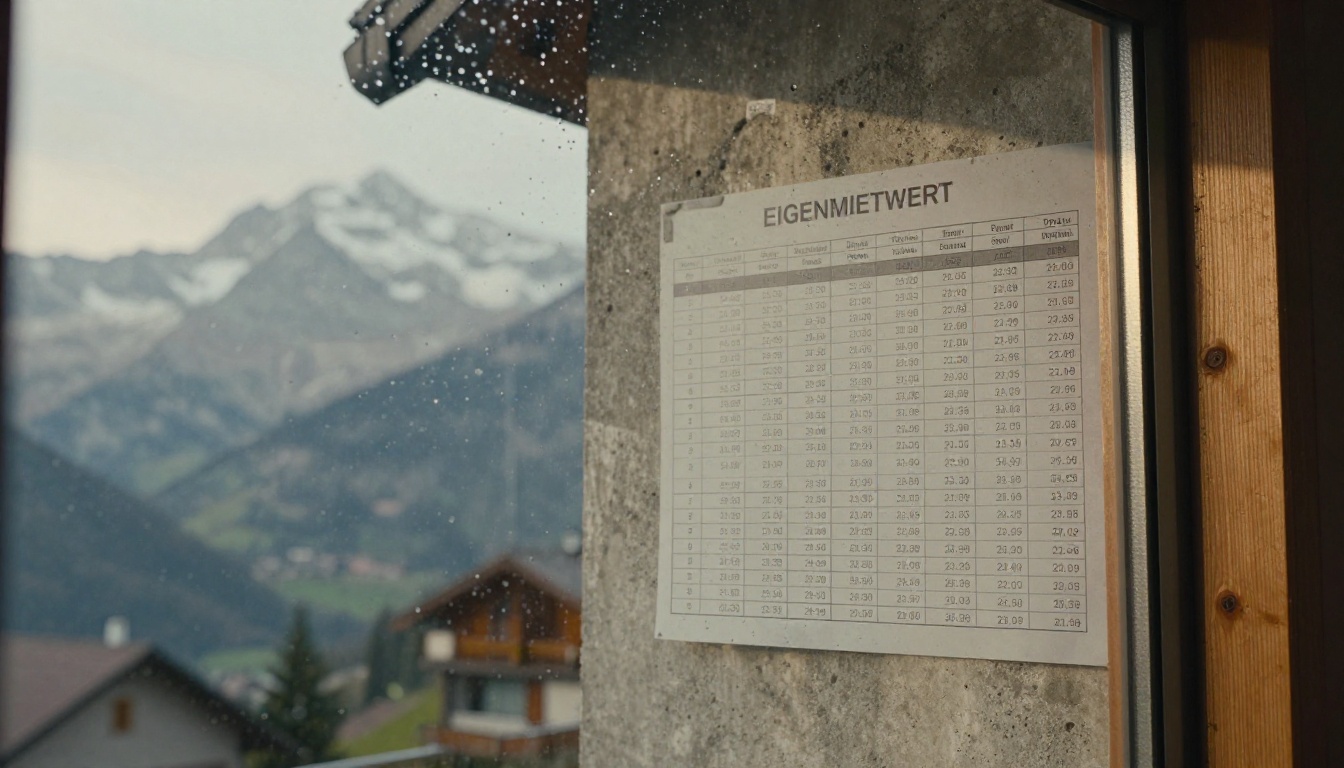
And those costs are substantial. Maintenance runs 1% of property value annually (CHF 7,000). Property taxes vary but add thousands more. The Eigenmietwert (imputed rental value) taxes you on theoretical rental income from your own home. Then there’s mortgage interest, which even at today’s 1.5-2% rates on 10-year fixes, adds CHF 10,500+ yearly on a typical loan.
Add it up, and owning costs 2-3x renting for the same property in many regions.
Where the Market Still Works (Sort Of)
Switzerland’s property market isn’t monolithic. Data from Lookmove shows median house prices per square meter range from CHF 3,173 in Courchavon (Jura) to CHF 35,776 in Gstaad, a 1,000% difference. In Zurich, prices swing from CHF 9,487 to CHF 23,166 per m² depending on neighborhood.
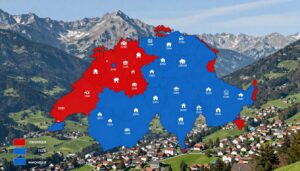
This creates micro-markets where buying can make sense. In some smaller municipalities, particularly in rural areas or specific cantons, price-to-rent ratios drop closer to 20. The detailed comparison of rent vs. buy costs across Swiss municipalities reveals that buying beats renting in 57% of municipalities, rising to 71% once the Eigenmietwert tax disappears.
But there’s a catch: supply. In 385 municipalities, zero houses came to market in 2025. In over 1,000 locations, not a single apartment was listed for sale. You’re not just competing on price, you’re competing for scarcity.
The 2026 Tax Time Bomb
Here’s where it gets spicy. Switzerland is abolishing the Eigenmietwert, likely by 2028. This sounds like great news for owners, but the reform comes with a poison pill: the elimination of mortgage interest deductions and reduced ability to deduct maintenance costs.
Currently, you can deduct mortgage interest and major renovation costs from your taxes. Under the new system, those deductions vanish. For owners of older properties facing Sanierungsstau (renovation backlog), this is catastrophic. If your heating system, roof, or facade needs work, you have a narrow window to do it while still getting tax benefits.
As the Blick analysis notes, 2026 is becoming a decisive year. Owners must choose: sell now while prices are high and buyers can still benefit from current tax rules, or invest heavily in renovations before the deduction window closes.

The ETF Alternative: Real Estate Without the Toilet Repairs
If you want real estate exposure without the headaches, Swiss real estate ETFs offer an intriguing alternative. The Swisscanto Real Estate Fund ETF charges 0.91% annually, while the UBS ETF SXI Real Estate Funds provides broad diversification across Swiss property funds.
These instruments give you property market returns without:
– CHF 100,000+ down payments
– Illiquidity (you can sell ETF shares in minutes)
– Maintenance calls at 2 AM
– Concentration risk in a single property
The trade-off? You lose leverage. Mortgages let you control a CHF 1 million asset with CHF 200,000 down. If property appreciates 2% annually, your return is 10% on invested capital. ETFs don’t offer that amplification.
But leverage cuts both ways. In a flat or falling market, increasingly likely as interest rates normalize, your downside is also magnified.
The Flexibility Premium
For expats and mobile professionals, the flexibility argument dominates. That St. Gallen resident works in Zurich but doesn’t know where they’ll be in five years. Buying would chain them to a specific location and a massive debt obligation.
Swiss employment markets are increasingly fluid. The average tenure at a company is shrinking, and cross-border mobility is rising. Renting lets you adapt. Buying forces you to predict the future.
This is particularly acute in Switzerland’s high-cost regions. The trade-off between buying property in Zurich and maintaining investment liquidity often comes down to one question: how confident are you that you’ll stay put for at least 10 years?
If the answer isn’t “very”, renting wins.
When Buying Does Make Sense
Despite the grim math, buying isn’t always wrong. It makes sense when:
1. You have a stable, long-term location (family, established career, no plans to move)
2. You find a property well below market rate (inheritance, distress sale, off-market deal)
3. You’re in a low-ratio municipality (rural areas, some smaller cities)
4. You value control over customization (renovating to exact specifications)
5. You’re hedging against extreme rent inflation (though Swiss rent controls limit this risk)
Even then, the true affordability of Swiss mortgages often surprises buyers. Banks may approve you for a CHF 1.5 million loan, but that doesn’t mean you can comfortably afford it. The “Tragbarkeit” (affordability) calculation assumes interest rates rise to 5% and that you can still service the debt with 33% of gross income, a stretch for most.
The Pillar 2 and 3a Traps
Many buyers raid their Pensionskasse (Pension fund) and Säule 3a (Third Pillar) to fund the down payment. This is mathematically catastrophic.
Withdrawing Pillar 2 funds means:
– Paying income tax on the withdrawal (10-15% depending on canton)
– Losing the tax-free compounding growth
– Reducing your retirement security
The long-term financial impact of withdrawing Pillar 2 for home purchase often costs more than the property appreciation. You’re trading a diversified, tax-advantaged portfolio for concentrated, illiquid real estate exposure.
Worse is the indirekte Amortisation (indirect amortization) through insurance-based Pillar 3a products. These lock you into high-fee, low-return insurance contracts for decades. The financial flexibility trade-offs of mortgage-linked Pillar 3a are severe: you can’t move the money without jeopardizing your mortgage, and the returns rarely beat a simple ETF portfolio.
The Verdict: Rent and Invest the Difference
For most young professionals and expats in Switzerland’s major cities, the optimal strategy is clear: rent a reasonably priced apartment and invest the difference in a diversified portfolio.
The math is compelling. If you save CHF 1,000 monthly by renting instead of owning, and invest it in a global equity ETF returning 7% annually, you’ll have CHF 173,000 after 10 years. That’s liquid wealth, not trapped equity.
This approach also avoids the risks of insurance-based Pillar 3a products tied to mortgages and gives you the flexibility to adapt as life changes.
The Bottom Line
The property-owning dream isn’t dead, but it’s on life support for most Swiss residents. Unless you have a compelling non-financial reason to buy, family stability, deep community roots, or a once-in-a-lifetime below-market deal, renting and investing wins.
The upcoming tax reforms will only widen this gap. As deductions disappear and transaction costs remain high (3-5% of purchase price), the breakeven horizon extends further.
Before you sign that mortgage, run the numbers three ways: optimistic, realistic, and pessimistic. Then ask yourself: am I buying a home, or am I buying a very expensive anchor?
Your future self might thank you for renting.